“As humanity has equipped itself with the technological means to meet its material needs, it has neglected the question of meaning. Of reflecting on our presence on Earth. Where we come from, where we are going. How we can live together, connected to one another. How the depth of time writes our history and allows us to shape our future. What we can pass on to our successors. What is the coherence of our lives and what values are we prepared to defend. We thought we could live without it. Materially nourished by industrial agriculture, supported by household appliances, occupied by screens, and healed by medication, we thought we had it all. But in reality, we have lost almost everything. And today, we are struggling to wake up.
To compensate for the void of meaning, we increasingly and unconsciously throw ourselves into consumer behaviors that lead nowhere. We gorge ourselves on food, distractions, comfort, cars, and connected devices, always demanding more because we don't know what else to do with our lives, and because it's the only widely accepted commandment in our society, the only one we've grown accustomed to subscribing to, or the only one we've been taught to subscribe to in order to lead a successful life. Between a yoga session, a business meeting, a visit to the phone store, and an evening watching our favorite series, the life of the Western man is punctuated by these preoccupations. And these goals are shared by all those who, living in emerging countries, fundamentally desire only one thing: access to these same conveniences.
If we continue to live this way, the Earth will be dead
to us
in a century.
We are therefore facing a fatal deadline. We are beginning to realize this. (…) At the same time, we feel that our individual lives are precarious, that work is scarce and jobs fragile, that states are less protective of citizens and are everywhere giving in to the law of the market and free competition to the detriment of public services, whether in education, healthcare, or transportation. Faced with this disaffection, individuals are turning against each other, demanding more recognition, dignity, purchasing power, and autonomy. Minorities are becoming more vocal, whether vegans, LGBTQ+ people, the Yellow Vests, or students. We feel that all of this is connected and that, fundamentally, we can no longer maintain a civilization based on individualism, competition, profit, and consumption.
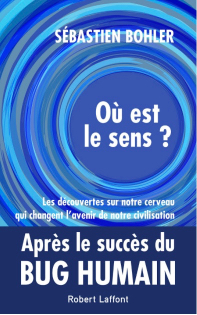
After presenting, in June, Viktor E. Frankl's "Man's Search for Meaning," which is actually an introduction to Logotherapy, a method the author developed in the 1930s, we return to the theme of the search for meaning, this time with a different approach. Sébastien Bohler offers his definition of meaning and then traces the history of this human quest. He presents uncertainty as the opposite of meaning and describes how it has recently permeated our daily lives. The cingulate cortex, which seeks to forge a clear path in its environment, is challenged by this uncertainty. Finally, he examines the current challenges and the responses humans are attempting to provide.
You will find excerpts that particularly interested me and summaries of the book's main ideas in the "Major Themes" section of the website, accessible via the link below.
https://www.thegoalisthepath.blog/projects/philosophy
The conversation continues
0 comments0 comments. Sign in to read and join the conversation.
Sign in