The theme

Philosophy

5 articles · about 2 h of reading

In this theme

01

Humanly Possible

Sarah Bakewell

25 min read
02

Rage and Time

Peter Sloterdijk

30 min read
03

Where Is the Meaning?

Sébastien Bohler

22 min read
04

Man's Search for Meaning

Viktor Frankl

40 min read
05

L'Ère de l'individu tyran

Éric Sadin

32 min read
1 / 5

Humanly Possible

HUMANLY POSSIBLE, Seven Hundred Years of Freethinking, Inquiry and Hope by Sarah Bakewell January 2026

These are times unseen and never experienced before for our generation and our kids’… The world order is literally turned upside down by the big lunatic bully who behaves like a spoiled brat over in Washington DC (Who and When will he be stopped?). It has become a world of absolute cynicism, as Thomas Mann expressed it in 1944 (see below). The rule of law is replaced by the rule of power. All despicable attitudes, such as hatred for the other, racism, blind individualism, corruption etc…, that mankind has taken centuries and generations to slowly contain since the age of enlightenment, (with awful wars and mass murders periodically reminding it of the huge challenge it had taken on), are creeping back towards the surface. As I started above, it feels like the rule of law and basic democratic and liberal principles are under siege, especially in the Western world. I therefore thought it was time, once again, to take a step back and, this time, talk about HUMANISM. Humanism has been at the core of the values that we have been taught growing up and I thought it would be a good reminder to dig into its history and main ideas in these troubled times, as humanistic values are obviously stepped on in a world where the strong rules or tries to rule again. In order to do so, I read and have picked excerpts from an excellent book called “HUMANLY POSSIBLE, Seven Hundred Years of Freethinking, Inquiry and Hope” by Sarah Bakewell, a British author and professor.

“The site Goodreads” summarizes the book shortly below: “Humanism is an expansive tradition of thought that places shared humanity, cultural vibrancy, and moral responsibility at the center of our lives. The humanistic worldview has inspired people for centuries to make their choices by principles of freethinking, intellectual inquiry, fellow feeling, and optimism. Voyaging from the literary enthusiasts of the fourteenth century to the secular campaigners of our own time, from Erasmus to Esperanto, from anatomists to agnostics, from Petrarca to Bertrand Russell, and from Voltaire to Desmond Tutu, Bakewell brings together extraordinary humanists across history. She explores their immense variety: some sought to promote scientific and rationalist ideas, others put more emphasis on moral living, and still others were concerned with the cultural and literary studies known as "the humanities." Humanly Possible asks not only what brings all these aspects of humanism together but why it has such enduring power, despite opposition from fanatics, mystics, and tyrants. A singular examination of this vital tradition as well as a dazzling contribution to its literature, this is an intoxicating, joyful celebration of the human. And at a moment when we are all too conscious of the world's divisions, Humanly Possible--brimming with ideas, experiments in living, and respect for the deepest ethical values--serves as a recentering, a call to care for one another, and a reminder that we are all, together, only human.”

In my own summary below, and to the contrary of the book, which is, in a very orderly way, developing the most important humanistic ideas and their thinkers in a chronological order, I’ve tried to regroup them by bigger themes, as the only way to make it simple and as short as possible.
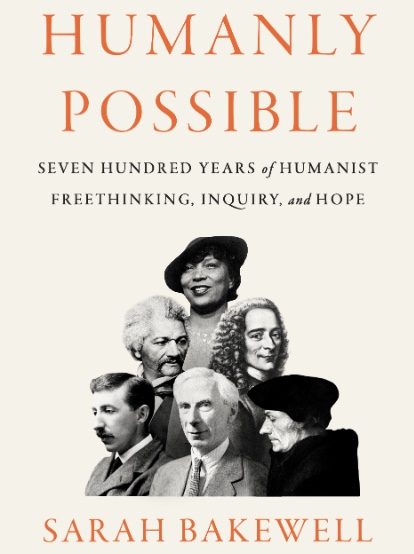
Illustration de l’article

To start with, some basic notions, definitions and principles:

Cultivating humanitas , in Latin, means being human, but with overtones of refinement, knowledge, eloquence, generosity, and politeness.

Humanism is personal and is a semantic cloud of meanings and connotations, where none can be attached to any particular theorist or practitioner.

We inhabit a reality that is neither entirely physical nor entirely spiritual. It is where we engage in culture, thought, morality, rituals, art—activities that are (largely, though not entirely) distinctive of our species. It is this reality that we devote much of our time and energy to : speaking, telling stories, creating images or figures, making ethical decisions and trying to do the right thing, negotiating social contracts, seeking contact with the divine in temples, churches, or sacred groves, conveying memories, teaching, playing music, joking, reasoning about things, and generally being the kind of beings we are. This is the realm that humanists of all stripes place at the center of their intellectual endeavors.

Humanism evokes strong reactions. It is entirely concerned with the human factor, but that factor is complex and touches us all deeply : to be human is a constant mystery and a constant challenge. When so much depends on our ideas about ourselves, it is not surprising that those who openly advocate humanist views can be attacked, especially in situations where the pressure for religious or political conformity is strong. Yet generation after generation of conscientious humanists have slowly, quietly, and with many setbacks argued their case with eloquence and reason, with the result that their ideas now permeate many societies, whether they are recognized as such or not.

Non-religious humanists base their moral decisions on human well-being, not on divine instructions. Religious humanists also focus on human well-being, but in the context of faith.

Many modern humanists are people who prefer to live without religious belief and to make their moral choices based on empathy, reason, and a sense of responsibility for other living beings. Their worldview has been formulated by the author Knut Vonnegut: "I am a humanist, who partly regrets that I have tried to behave decently without expecting reward or punishment after death."

4 ideas have shaped humanism and were shaped by it : Universality, diversity, critical thinking, moral connections.

The first is that we are all united by our humanity  and that “nothing human is alien.”

The second idea emphasizes difference instead or as part of universality.  Yes, we are all human, but we experience life in different ways depending on culture, political situation, and other factors—and such differences should be respected and acknowledged.

A third principle is the value of critical thinking and inquiry . For a humanist of any kind, nothing in human life should ever be taken for granted or given because of authority or tradition. What IS may NOT be right, and should be questioned. The need to cultivate and nurture our potential permeates the humanistic tradition. Therefore, education  is the most important thing of all.

The fourth is the general belief that our moral lives , which are central to our humanity, are best served by seeking ways to connect and communicate with one another . We are by nature social creatures and we can all recognize something of ourselves in each other's experiences, even when they are made by people who seem very different from ourselves. Desmond Tutu (1931-2021), the South African Anglican bishop and theologian, known for his work as an anti-apartheid and human rights activist, expressed it like this : « We belong in the tangle of life. We say « a man is a man through other men. » »

There are many different ways of saying that our moral lives should be rooted in the connections between people. Compassion, not the sense of being scrutinized and judged by divine standards, is the foundation of our ethics. The good news is that we – for the most part – seem to feel compassion spontaneously because we are highly social beings who have already been raised in close contact with the people around us.

In other words, they all lean towards an ethics based on relationships to others and on a mortal life in the world rather than the hope of a life after this.

Finally, Shifting focus to the here and now  remains one of the most important principles of modern humanist organizations.

As Robert G Ingersoll (1833-1899), an American lawyer, writer, and orator who campaigned in defense of agnosticism put it : "Happiness is the only good thing. The time to be happy is now. The place to be happy is here." And Ingersoll concludes with the all-encompassing, concluding line: "The way to be happy is to make others happy."

Three basic principles are recurrent in humanism :

·      Free thought : because humanists of many stripes prefer to let their lives be guided by their own moral conscience, by evidence, or by their social and political responsibility to others rather than by dogmas that are merely slurred with references to authorities.

·      Inquiry : because humanists believe in study and education, and seek to apply critical reason to sacred scriptures and other sources that are claimed to be above all such things.

·      And hope  : because humanists believe that, despite all our shortcomings, it is humanly possible for us to accomplish valuable things during our short time on earth, in literature, art, or historical research, by increasing scientific knowledge or making the world a better place for ourselves or other living beings.

Thus, in order to follow a red thread between the different humanists’ contributions, we will focus below on their views on three main themes, starting with a brief summary on Montaigne’s views on Universality and Diversity, different authors’ ideas about Moral Life and System, and thereafter Education, (through studies and literature). It will be followed by some other main ideas and discussions, that are recurrent among humanists.

MONTAIGNE ON UNIVERSALITY AND DIVERSITY

One of the first philosophers to focus on our universality, without omitting the essential diversity of mankind was Michel de Montaigne  (1533-1592), who was truly a humanist: the « Essays » constantly return to the classic humanist themes, moral judgment, politeness, education, virtue, politics, elegant literature, rhetoric, the beauty of books and texts, and the question of whether we are worthy of admiration or contempt. According to him, « the most universal quality is diversity ». Yet the entire Essays  project also rests on the belief that all people share a fundamental, common humanity. Montaigne writes that each of us carries the human condition in its «whole form». This is why we can recognize ourselves in the experiences and personalities of other people, however much our cultural attitudes or backgrounds may differ. The encounter with diversity helps to make us more tolerant: as Montaigne said, when he spoke of the beneficial consequences of travel: « The fact that there are so many different temperaments, so many different philosophical schools, judgments, opinions, laws and customs teaches us to judge sensibly about our own. »

MORAL LIFE AND SYSTEM

The foundations of an ethical system based on humanity and a kind of moral “good taste” were formulated in 1699 by the English philosopher Anthony Ashley Cooper, third Earl of Shaftesbury (1671-1713 ).  He was a deist, with a vision of the universe as a generally benevolent and harmonious place. For Shaftesbury, everything is interconnected, including people, and that is what underlies our ability to respond sympathetically to one another. This in turn is the seed from which we can cultivate a fully developed moral life. This moral development, crucially, does not require any particular belief system because it grows out of our nature.   We need only develop our good ethical taste,  much as we might develop a taste for art. The process depends more on pleasure and satisfaction than anything else: when we do something good for others, they like and appreciate us – it is a pleasant feeling and therefore we do more good. Eventually, one can become what the French called an “ honnête homme ”: cultured, humane, in balance, at ease in the world – a person with humanitas .

Thomas Paine  (1737-1809), the British philosopher, mostly known for his pamphlet « The Common Sense » believed that a human based morality  implies that we do not need any external authority to guide our ethical choices. He thus opposed religion and compassion.

The ecclesiastical institutions created to convey the Christian stories are: « Human inventions, introduced to instill fear and a slavish mind in the human race and to make power and profit a monopoly ». Paine's humanist principles: Be grateful for life, do not make a cult of suffering, be tolerant of others, and try to deal with problems as rationally as possible. He summarized his humanist beliefs: "I believe in the equality of men, and that religious duties consist in practicing justice, loving mercy, and trying to make our fellow beings happy."

The ethical consequences of living outside of “faith” are dramatic. If we want to live in a well-ordered and peaceful society, we must create and maintain it. Instead of referring moral issues to divine commandments, we must build our own system of good, generous, and mutually beneficial ethics. We can try to establish our own rules like “choose the action that will produce the greatest happiness for the greatest number.” These are useful tools for moral thinking, but they are not the same as a set of commandments literally carved in stone by God. Our moral lives remain complex, personal, and human.

Humanists and Enlightenment thinkers were thus drawn to an old idea: that the best seed for this human, moral world consists of our spontaneous tendency to respond to one another with compassion: "sympathy" or empathy, or the feeling of mutual connection. These are what the French philosopher Condorcet (1743-1794) called "normal impulses to show one's benevolence in action, « to show oneself tactful and generous ». In every human heart, nature herself has sown such a seed, which only awaits enlightenment and freedom to develop.

Somewhat later, i n the closing passage of On the Origin of Species , Darwin (1809-1882) had marveled at the way in which simple natural processes could produce extraordinary and beautiful results. But he also realized that his theory of natural selection and survival of the fittest did not provide any obvious basis for human morality .

No direct basis, that is, but in The Descent of Man  he did offer a possible, indirect explanation for how morality entered our human world. His theory owed a great debt of gratitude to Enlightenment humanists such as David Hume , since, like them, he believed that morality probably stemmed from our capacity for compassion and “sympathy.” This in turn stemmed from our nature as herd animals. Like all species, early humans had to manage interpersonal relationships within groups: they developed our sensitivity to the response of others. When they treat us well, we feel at ease. Other animals share this sensitivity, but in our case we also have language and can go further in expressing our feelings in the form of praise or blame. Our moral world deepens, since we can also look back on past situations and compare them with what we have done before and the response it received. From this, general ethical views begin to take shape and can be shared with others. In this way, from a mixture of « habit, example, instruction and reflection », a moral system emerges.

This brings us to the role of Communication and Connection through Eloquence : Eloquence is – as humanists and orators of previous centuries in every culture have always known – essential to human beings. Language in general is our very element, the foundation of our social and moral lives. It allows us to formulate in detail our intellectual critique of the existing world, to apply our best reasoning to it, to imagine in words how things could be different – ​​and then to convince others of its ideas and reasoning.

Language also plays a significant role in tying us into what Archbishop Desmond Tutu  called the “bond of humanity”. We communicate and connect with each other. And that is the fourth of the ideas that has helped humanists broaden their scope.

LITERATURE AND STUDIES

Boccacio (1313-1375) and Petrarch (1304-1374 ), belonged to scholars and professors, who in the end of the Middle Ages, having survived the horrors of the black death in Florence, contributed to the beginninng of the Renaissance movement with their poems, tales (the Decameron ) and, most of all, their translating and spreading of classic Roman and Greek litterature.

For Petrarch books are social : « They speak to us, advise us, and bind us together with a certain living, penetrating intimacy ».

Petrarch and Boccaccio formulated the mission for their successors: to dig up all traces of wisdom and genius, to study them, to disseminate them, to use them to illuminate moral and political questions, and to create new works after old models of similar wisdom and genius.

A little later, in in the 14th century, Erasmus  (around 1466-1536) firmly believed in the blessings of education and the ways in which literature and study could help people live and thrive in troubled and complicated times.

Erasmus also taught the necessary habits for a satisfying intellectual existence, and the key here is to have a richly equipped inner life with as wide a frame of reference as possible. This gives better judgment and an ability to express oneself with understanding as well as elegance. He recommended reading good books and the popular technique of the time: narrowing down your notes by subject, so that you remember what you read and can combine it with other ideas in a useful way. If there is no paper at hand, you can scribble notes on the wall or even carve them into window glass. The most important thing is to build a treasury within yourself, so that it is always there to hand.

In the middle of the 18th century, the English novelist George Eliot  (1819-1880) believed that there were real moral benefits to reading fiction, because it broadened the circle of our sympathy, or what we would now call our “empathy.”  In an essay, she wrote: “The greatest service for which we are indebted to the artist, whether a painter, a poet, or a novelist, is the enlargement of our sympathy… A picture of human life, such as a great artist can give, awakens in even the common and the selfish that attention to that which is outside themselves which may be called the raw material of moral feeling.”

Recent research has lent support to this idea, suggesting that fiction actually leads us to be more empathetic and to make more morally generous choices. Others doubt it, and some even wonder whether increased empathy is something worth striving for, since reason sometimes provides better guidance. The whole question remains for the time being in a Montaigne-esque state of complexity and uncertainty.

On education, the German naturalist and explorer Alexander Von Humboldt (1769-1859) believed that education at all levels would not be primarily about learning skills, but about creating people with a sense of moral responsibility, a rich inner life, and an intellectual openness to knowledge . Once they were in possession of all of this, people would move forward in a well-founded way, whatever path they chose in life. The British biologist and paleontologist Thomas Henry Huxley  (1825-1895) agreed with Humboldt that the purpose of education was to create multifaceted people with a rich spiritual life and an insightful understanding of the world.

Bertrand Russell  (1872-1970), the British mathematician and philosopher who lived through almost 100 years of enormous transformations and developments as well as two devastating world wars, was convinced that it is never enough to refer to an authority to accept a claim .

He believed that schools should encourage "the nourishment of the mind, the growth of conscience, and the strength of character." He shared the view with TH Huxley that scientific study was essential for developing an inquiring attitude toward the world. A scientific education helped to guard against superstitions, stimulated the imagination, and encouraged people to think about "what the world could be" rather than focusing on what already was.

Many other ideas are developed in the book in connection with these basic humanistic pillars and several big themes are worth mentioning, such as Liberalism and the Role of the State, how Fascism collides with Humanism, Why we still go to War. And we end with the question whether Humanism is Weakness ?

LIBERALISM AND THE ROLE OF THE STATE

Humboldt's  (see above) main subject was the state's self-imposed role as moral and ideological arbiter of human life. Governments and authorities, he writes, seem to feel that it is their duty to impose a certain religion or dogma on their society, since they believe that otherwise everything will degenerate into chaos and immorality. Humboldt disagreed with this for humanistic reasons. He had a humanist view of morality: he believed that its seeds lie in our natural aptitude for kindness and humanity. Such impulses need guidance and development, but they do not need to be replaced by state-decreed commandments. If the state dictates moral principles, it hinders their natural development. In this way, a state that imposes a certain faith effectively denies its population the right to become fully human.

Humboldt asserts the key principle of liberalism : The task of government is not to tell people whom to marry, or what to believe or say, or what to hold sacred, but essentially to ensure that their choices do not harm others . We need the state to guarantee the necessary conditions for a decent life and for our freedom.

It is clearly not a philosophy that tends to appeal to any traditionalist regime. Nor does it have much to offer revolutionaries: they are more likely to seek a radical transformation of every aspect of society, which ultimately always means interfering in the quiet lives and private choices of individuals.

In British philosopher John Stuart Mill's  (1806-1873) eyes, as in Humboldt's, the state's role is to intervene if my pursuit of freedom and experience harms yours. The state should not tell people what to do: it is not its role to define a single, perfect way of living. Its role is to enable each of us to have the space we need to stretch ourselves, without depriving others of their space.

Mill's human element enhances liberalism. It distinguishes it, for example, from the parody now described as "neoliberalism," which allows the rich to pursue profits without restraint while the rest of the population is left to deal with the consequences of a plundered society. In Mill's eyes, as in Humboldt's, this is the essence of freedom. A truly liberal society values ​​and enables a deeper self-realization : a search for meaning and beauty, a diversity of cultural and personal experiences, the excitement of intellectual discovery, and the joy of love and friendship.

The ideas of Humboldt and the Mills remain at the heart of liberal society today, not only for their ideas about freedom but for their humanism: their vision of a society built on human self-realization, where each of us can develop our lives and realize our humanity to the fullest. No society can claim to have completely achieved such a thing – far from it. But reaching a static, ideal perfection has never been a liberal goal, or a utopian one. Or a humanist one for that matter. The goal in all three cases is simply to create a little more good things in life and a little less bad.

FASCISM VS HUMANISM

The ideology of fascism, with Giovanni Gentile, Mussolini's philosophical armadillo :

Gentile explained that a fascist state does not aim to increase human happiness or well-being and is not interested in the idea of ​​progress. If life was always getting progressively better, why would anyone want to fight and die for a transcendent, glorious purpose ? Far from the liberal vision of a state that intervened mainly to prevent individuals from harming each other, the fascist state sometimes could harm people, to promote the interests of the nation. Instead, it offers something greater than happiness or well-being ; it offers self-sacrifice. The state, transformed into the source of value for all people, plays a role similar to God : fascism is explicitly "a religious concept". Like most monotheistic gods, the state demands a «discipline and an authority that descends into and dominates without resistance the interior of the soul ». « Through submission the individual gains true freedom, « the only serious kind of freedom ».

Education  was nevertheless important because ordinary people as we know them, according to the fascist vision, had to be transformed to meet the needs of the state. As Gentile wrote, fascism offered a complete transformation of man : it sought to rebuild “the man, the character, the faith.” This goal, to transform humanity, often recurs in anti-humanist regimes. Leon Trotsky wrote in 1924, about raising people to a higher level, transforming them socially and even biologically. In the new era, he predicted, the human race would “once again enter a stage of radical transformation and… become subject to the most complicated methods of artificial selection and psychophysical training… Man will make it his aim to master his feelings, raise his instincts to that of consciousness, make them accessible to reason, stretch the threads of his will to hidden corners and thus raise himself to a higher level, create a higher social and biological type or, if you like, a superman”.

As Hannah Arendt put it : «The aim of a totalitarian education has never been to instill beliefs, but to destroy the ability to create some ».

In opposition to Gentile, contemporary Italian philosopher and politician Benedetto Croce (1866-1952) believed that the long arc of history was still leading towards greater freedom and progress, even if setbacks occurred from time to time. The important thing, he wrote in a 1937 essay, is to understand that these setbacks must occur and therefore not to despair when they do. At the same time, one cannot take this as an excuse to sit back and just wait for better times to return of their own accord. It is with freedom as with life itself : it must be constantly fought for, even if the struggle never takes off, and even if it is tempting from time to time to give up hope.

He also emphasized the principle of "work in progress." It is a mistake to despair of ourselves, he wrote in 1947 ; we make that mistake because we have come to expect a reliable and benevolent world in which everyone lives a civilized and pleasant life. When that fantasy is shattered, we are ready to give up. The reality, however, is that history and the world of man are neither stable and good on the one hand, nor hopelessly tragic on the other. It is our own doing, so if we want it to progress well we must exert ourselves to the utmost to make it so.

WHY DO WE GO TO WAR?

Bad government is always behind war. Wars start because rulers are foolish or irresponsible and whip up the worst feelings of man. Lawyers and theologians who should be looking for peaceful solutions instead make things worse. The situation escalates and it is too late to prevent it. War is a blunder: a failure in the art of being human. Erasmus agreed with this view. We already have what we need in our nature, yet we still have to learn how to manage our relationships, our society, our politics. We get that knowledge from each other and we should always pass it on. This is the main reason why education,  especially in the art of coexistence and consideration, is so central to the humanist worldview.

Later commentators have sadly pointed out that Erasmus seemed to underestimate the true depth of man’s attraction to violence, irrationality, and fanaticism—probably because of his own kind and bright personality. Himself immune to the allure of the battlefield and the intoxication of extreme ideas, he simply could not understand why others found them so powerful. He was no Machiavelli in his interpretation of the psychological (or political, or economic) machinery that can lead to war. Other humanists in other times have had a similar blind spot, helplessly wondering why everyone around them seems to have gone mad.

IS HUMANISM WEAKNESS ?

Thomas Mann , in his diary entries on Stefan Zweig's memoirs, remarked that what Erasmus apparently failed to grasp was a remarkable fact. It was not just that humanism had no chance of asserting itself ; it was that so many people actually seemed to long for a world of violence and irrationality. But the humanists' lack of boldness also played a role. In a 1935 lecture, Mann said : "In all humanism there is an element of weakness which... may be its undoing." He blamed its tendency to be too compliant. Humanists give in too easily. "Frightened, stunned, ignorant of what is going on, and with anxious smiles, they abandon position after position and seem to agree that they "no longer understand the world." They even adapt to the style of their enemy. Worst of all, they always try to see both sides of every question. When dealing with murderous fanaticism, the lack of boldness isn’t necessarily an advantage .

In a broadcast in May 1944, he said :

« Humanity cannot accept the final victory of evil, lies and violence – it simply cannot live with it. The world that would follow a victory for Hitler would be not only a world of universal slavery but also a world of absolute cynicism, a world that would find it impossible to believe in the higher and better in man, a world that would simply belong to evil and be subject to evil. Such a world does not exist ; it cannot be tolerated. The rebellion of humanity against a Hitler world filled with the utmost despair of love and goodness – that rebellion is the most certain of all certainties.  »

Jean-Paul Sartre  advocated, immediately after the war, an "existentialist" humanism based on the idea that each of us is radically free and responsible for our actions. It is up to us what we do ourselves; we must, individually and in every choice we make, "invent man."

The most obvious area where people needed to sharpen their skills in the aftermath of World War II was nuclear weapons. As Sartre put it in October 1945, the lesson of Hiroshima and Nagasaki was that from now on it would always be up to people themselves to decide whether they wanted to survive or not – the ultimate existentialist choice.

A  COUPLE OF FINAL WORD

And to finish, in times when Trump tries to replace the 80 year-old UN by his own « peace club » with friends like Putin, Orban, Lukashenko, Milei… a little reminder of the humanist inspiration at the origin of the former’s Declaration of Human Rights. The editorial board that drafted the document in 1947 was led by Eleanor Roosevelt and took its task seriously : they consulted philosophers from all over the world and representatives of different political views. Principles had to be found that satisfied everyone and this meant deciding positions on major philosophical questions: whether rights or duties were most important, how individualism could be weighed against social identity, how to include, whether one could even speak of something « universal » concerning humanity. These questions are still in the general cultural debate today.

NOW, let’s end with a light and joyful word from the book’s author…

Science tells us things that I (the author) only describe as sublime : that we live in a universe estimated to contain some 125 billion galaxies, of which our galaxy alone contains about 100 billion stars, of which our particular star shines on our planet and fills it with some 8.7 million different species of living beings, one of whom is capable of studying and marveling at such observations. It also makes us a wonder: one and a half kilograms of fleshy brain matter is capable of embracing and developing such knowledge and generating an entire miniature universe of consciousness, emotion, and self-reflection.

À bientôt !
2 / 5

Rage and Time

RAGE AND TIME, Peter Sloterdijk

November 2025

In "The End of History and the Last Man," written in 1992, Francis Fukuyama builds a significant portion of his explanation for the evolution of our societies on the eminently strategic and complex notion of thymos. This concept, borrowed from Hegel but not invented by him (see below), proves to be as old as political philosophy itself. Thymos refers to that by which humankind has differed from animals from the very beginning: the desire for recognition. This is a driving force as powerful as the instinct for self-preservation. One could also translate this notion as pride, self-esteem, or the quest for dignity. Here we have the part of the personality that is at the root of emotions such as pride, anger, or shame.

In Rage and Time (or Zorn und Zeit, published in 2006), the German philosopher Peter Sloterdijk analyzes the Homeric, biblical, Leninist, and anarchist forms of anger to demonstrate how this initially instinctive emotion has developed into a global reservoir of vengeance, where the feelings of the oppressed serve as a springboard to power. He concludes with the latest major movement to harness anger (at the time of the book's publication…), namely political Islam, and finally announces the conditions for the advent of a world without Resentment.

The last time I felt real anger was about fifteen years ago, when my partners literally kicked me out of the company we had built together. One of them didn't stop there; he also implied that I'd be better off giving up business development, my profession for the past 25 years, for administrative tasks that would suit me better. It felt like being kicked in the gut when I was already down. In short, for many months afterward, I would wake up at night imagining myself ripping them apart one after the other… My anger stemmed from the humiliation I felt, as well as a strong sense of injustice. In retrospect, I now think it was certainly one of the most formative and transformative episodes of my life.

Suffice it to say, this book captivated me, not only for the insight it provided into my own experience, but also for its historical analysis of anger in society and throughout history. After defining the physiological origins of anger, Peter Sloterdijk traces the history of the concept of thymos back to its Greek origins, elaborating on the channeling of anger as a structuring element of society in Christianity, Communism, and then political Islam, without neglecting a look at its driving forces and its explosions in revolutions or acts of vandalism. Twenty years have passed since "Rage and Time" was written. It naturally remains highly relevant, although new movements that capture anger, primarily fueled and channeled by populism and the far right, have exacerbated the polarization of Western societies. These are themes often explored in this blog…

Below you will find excerpts and passages that I found most relevant.

But first, a quick reminder with the Larousse French dictionary’s definition of anger : A violent and temporary emotional state resulting from a feeling of aggression or unpleasantness, expressing strong dissatisfaction and accompanied by harsh reactions. The Oxford English Dictionary is more straight to the point… ): a strong feeling of annoyance, displeasure, or hostility. Funny enough (or ?) it also says that anger is a borrowing from early scandinavian.

Enjoy!

RAGE AND TIME, Peter Sloterdijk (2006)

• Introduction : Anger is one of the thymotic impulses (related to mood, aggression, and passion) and finds its origins in the very physiological nature of humankind…

Don't worry if the following two short paragraphs are a bit difficult (I haven't managed to simplify them while keeping the meaning), at worst skip them, the rest is much more understandable (note by Mikael)…

In a vital system, metabolic activities stabilize high internal performance, both physically and psychologically. The phenomenon of warm blood is its most striking embodiment. With it was accomplished (…) the emancipation of the organism from the surrounding temperatures – the shift from biological movement to freedom of movement.

The detachment of the warm-blooded organism from the primacy of the environment finds its mental counterpart in the thymotic impulses of individuals and groups. As a warm-blooded moral being, the human being needs to maintain a certain internal level of self-respect—this, too, triggers a tendency for the "organism" to detach itself from the primacy of the environment. When the impulses of pride demand their due, a differential appears at the psychic level between the inner and outer worlds, in which the pole of the self naturally demands the highest tone. In non-technical terms, the same idea can be articulated by this thesis: humans have an innate sense of dignity and justice. This intuition must be taken into account by any political organization of communal life.

To manage systems with a moral ambition, also known as cultures, one needs the self-stimulation of actors through the development of thymotic resources such as pride, ambition, the will to assert oneself, the propensity for indignation, and a sense of rights. In their modus vivendi , units of this type constitute specific local values, sometimes even using universalist dialects.

• “Of Matters of Anger in General”

In the case of emotional wounds, one might say, the soul comes into contact with the deliberate or unintentional cruelty of others—and in such cases, too, one can speak of subtle mechanisms for the mental healing of these wounds. Among these are spontaneous protest, the demand to immediately hold the perpetrator accountable, or, if this is not possible, the principle of seeking satisfaction when the time comes. Alongside these are withdrawal, resignation, reinterpreting the scene as test, refusing to acknowledge what has happened, and, ultimately, when only a drastic psychological remedy seems effective, the internalization of the wound as an unconsciously deserved punishment, which can even extend to masochistic worship of the aggressor. In addition to this home pharmacy for the wounded self, Buddhism, Stoicism, and Catholicism have developed moral exercises through which the wounded psyche can acquire the capacity to transcend the cycle of vexation and revenge. As long as history represents the eternal pendulum swing of blow and counterblow, wisdom dictates that we stop the pendulum.

• The Greek premises of modern combat – the theory of thymòs .

In the fourth book of his text on community, The Republic, Plato outlines a theory of thymós , a theory of great psychological richness and far-reaching political significance. The most remarkable function of thymós —interpreted in the Platonic sense—is its capacity to turn a person against oneself. This turning against oneself can occur when a person fails to meet the requirements necessary to maintain their self-respect. Plato's discovery is the moral significance of intense self-disapproval. This manifests itself in two ways: first, in shame, as total affective atmosphere that penetrates the subject to their very core; and second, in angry self-reproach, which takes the form of an internal monologue directed at oneself. (...) It is with this turning toward self-rejection that the adventure of independence begins. Only those who can blame themselves can direct themselves.

Insofar as thethymósconditioned for the City is the seat of the quest for recognition described by Hegel, we can understand why the lack of recognition by the "other endowed with value" provokes anger. When we demand recognition from a given interlocutor, we subject them to a moral test. If the person in question refuses to submit to this examination, they must confront the anger of the challenger, who feels scorned. The simmering of anger occurs first when I am denied recognition by others (which gives rise to extroverted anger), but it is also triggered when I deny myself recognition, in light of my own conceptions of values (which gives me reasons to be angry with myself). According to the theory of Stoicism, which transposed the struggle for recognition entirely inward, internal self-approval should suffice for the wise person, firstly because the individual has no power over the judgment of others anyway, and secondly because the one who knows will strive to remain free with regard to everything that does not depend on himself.

Generally, however, the thymotic impulse is associated with the desire to see one's sense of self-worth confirmed by the feedback from others.

  • Channeling Anger in the Christian Era

The Christian era, considered as a whole, was not an era of vengeance. On the contrary, it imposed, with great seriousness, an ethic of postponing revenge. One need not look far to find the cause : it lies in the faith of Christians, convinced that God's justice would one day, at the end of time, ensure a correction of moral balances. The prospect of life after death was always associated, in the realm of Christian thought, with the hope of a suprahistorical compensation for suffering. The price of this ethic of renouncing revenge in the present time in favor of compensation to be received in the hereafter was high. It was paid for by the widespread development of a latent resentment that projected the suppressed desire for revenge, and its counterpart, the fear of damnation, onto the central element of the faith : the theory of the Last Things. Thus, the punishment of the arrogant became, for all eternity, condition of the ambiguous arrangement between people of goodwill and evil situations. This produced a side effect : even the good and humble began to tremble before what they reserved for the wicked troublemakers.

Nietzsche’s central teaching, that of the death of God, takes on a meaning in the context outlined here whose psycho-political implications only become apparent much later. God is dead, which means, in light of our experience : we live in an age where the absorption of anger by a rigorous and respectful beyond is increasingly lacking. Countless people have long felt that postponing human vengeance in favor of divine vengeance at the end of time is an unacceptable demand. In such a situation, all signs point to a storm. Consequently, the politics of impatience are gaining even more ground, particularly among ambitious and outrage-mongering figures who consider themselves entitled to attack as soon as they have nothing to lose on earth or in the hereafter.

• The Revolution

Before Nietzsche and before communism, there were a number of revolutions. The conclusion drawn from historical experience is unambiguous : the petty craftsmanship of anger is doomed to exhaust itself in sloppy work resulting in heavy losses. As long as the local capacities of rebellious passions are not gathered into centers of anger operating across vast areas and coordinated by a visionary strategy, they are consumed in their expressive clamor. Isolated fragments of rage simmer in pitiful pots until they evaporate or leave behind charred sediments that cannot be reheated. This is what the history of small protest parties unambiguously demonstrates. Only when hidden energies are channeled into grand, well-considered projects, and when sufficiently calm and diabolical directors, endowed with a long-term vision, take charge of managing the collective capacity for anger, can the many isolated hearths become a powerhouse supplying the energy for coordinated actions capable of reaching the level of "world politics." This requires visionary slogans that address not only humanity's acute rage but also its deeper bitterness, and, notably, its hopes and pride. The coldest anger writes its activity reports in the style of burning idealism.

Since asymmetry is merely a technical term for inequality—and also, under egalitarian premise, for “injustice”—all revolutions since the French Revolution of 1789 have been accompanied by waves of disappointment and frustration that invariably produce, in addition to resignation and a cynical rejection of past illusions, acute and contemporary forms of anger. From these arise the typical aspirations of the era for a broad and profound reenactment of the revolutionary drama.

Since the events following the storming of the Bastille, the ideological and political history of Europe has been woven with the hope of the disillusioned, the hope of a second revolution, the true, the real, the complete one that will bring belated satisfaction to those deceived and left behind by the great days. Hence the historic slogan "The struggle continues !" which is found more or less explicitly in all dissident movements, from the radicals of 1792 to the anti-globalization activists of Seattle, Genoa, and Davos. After the victorious Third Estate appropriated what was rightfully its own in 1789, the losers of that era also wanted to enjoy it—I am referring to the orators of the Fourth Estate, those excluded from the bourgeoisie's feast.

Throughout the two-hundred-year tradition of the left, the fact that the driving force of social utopias was only very partially derived from the principle of abolishing the privileges of the ruling class has most often been overlooked.

Given the illusory implications of the "advancing revolution," it is no surprise that the strongest social-revolutionary impulses have always stemmed from the ambitions of those activists who spoke on behalf of the masses while simultaneously pursuing their own ambitions. The weakness of these aspirants lay in their willful disregard for a basic reality : even after successful upheavals, good positions remain scarce and highly sought after.

  • The Channeling of Anger by Communism

For communism in power, the satisfaction of the philistine intoxication of expropriation and the demand for revenge against private wealth as a whole have always been far more important than the liberation of the flow of value. Consequently, of the great impetus of humanity's egalitarian turn, little remained in the end except the blatant privilege granted to themselves by officials—not to mention the legacy of paralysis, resignation, and cynicism.

It took Lenin's intervention for the mobilizing myth of communism to touch the ground of reality. On the original left-wing fascist, of Leninist persuasion, the characteristics of the new political style appeared with definitive force, a style that never denied its origins in the realities of the first world war. Among these, we must mention: the monologic conception, whether latent or manifest, of the relationship between the leader and those he leads (see below); the constant agitation of "society" for the purposes of mobilization; the transposition of the military habitus to economic production; the rigorous centralism of the leadership staffs; the cult of militancy as a way of life (see below); ascetic collectivism; hatred of liberal forms of commerce; compulsory enthusiasm for the revolutionary cause; the monopolization of public space by Party propaganda; the overall rejection of bourgeois culture and civility; the subjugation of science to the law of taking sides; the work aimed at making peaceful ideals contemptible; distrust of individualism, cosmopolitanism and pluralism; the permanent spying on one's own entourage; the exterminist mode of dealing with the political adversary; and finally the tendency, inspired by the Jacobin Terror, to hold summary trials in which the accusation already contains the verdict of guilt.

Since we have been looking back on socialism, which has ceased to be real, we have grasped the sharp and angry side of the post-communist situation: after 1991, nothing could be understood that would not have been obvious, in principle, to attentive observers of the Soviet experience since 1918 and Lenin's decrees on the Red Terror, to left-wing sympathizers from 1921, to the "fellow travelers" with strong nerves since the purges of the 1930s, to the one-eyed anti-fascists from 1945, to those who had remained calcified in utopian obstinacy from 1956, and to the students in the catch-up history class from 1968…

o The Monologic Conception

Regarding the monologic conception, the “Party,” this political agent, was dependent, in a way it could scarcely discern itself, on the ideological figure of the leader and guiding light—to such a degree that the Party itself functioned only as a monologic machine in which the leader’s conversations with himself continued on a broader scale. The head of the revolutionary movement had to radiate his knowledge and will as a theoretical and moral monarch throughout the various parts of the body to transform it as a whole, or at least its central committee, into an “organ” of the collective monarchy. Episodes of discussion within the communist movement have always been mere additions to an unshakeably monologic ideal. Doesn’t this sound terribly reminiscent of La France Insoumise, LFI and its leader, Jean-Luc Mélenchon (see Olivier Pérou’s « La Meute », Mikael’s note…)

  • Militancy : The Preservation of Anger

Militancy, both ancient and modern, is one of the main keys to shaping anger and time because, in its earliest forms, it sets in motion the actual history of the cumulative memory of anger. It is therefore part of the original history of what Nietzsche called "resentment." This begins to form when vengeful anger is prevented from expressing itself directly and is forced to take the detour of postponement, internalization, transposition, and displacement. Each time the feelings associated with having suffered a setback are subjected to the constraints of postponement, censorship, and metaphorization, local warehouses of anger fill up, their contents being preserved only to be emptied later and transposed in the opposite direction. The conservation of anger places the psyche of the inhibited avenger before the challenge of combining the restraint of anger and its preparation for a date that has not been set. This can only be achieved through an internalization based on successful externalizations. We see how this works by studying the culture of post-Babylonian Jewish prayer, in which the desire for revenge becomes an internal matter and penetrates even into the intimate dialogue of the soul with God. At the same time, models of this type of inner dialogue are objectified in a collection of texts and become transmissible through generations.

• The Great Reservoir of Jealousy in the Liberal System

Once the physical battles are fought, the metaphorical wars begin. These are inevitable because the liberal world's summary measure of satisfaction—the mutual recognition of all by all as fellow citizens, placed on equal footing, within the community—remains in reality far too formal and nonspecific to grant the individual access to a happy consciousness. Even and especially in a world filled with widespread freedoms, people cannot cease seeking the specific recognitions that manifest themselves in prestige, comfort, sexual advantages, and intellectual superiority. Since such goods remain scarce, whatever the circumstances, a great reservoir of jealousy and displeasure fills up among the disenfranchised competitors of the liberal system—not to mention those who are genuinely disadvantaged and those who are de facto excluded from it. The more pacified society is in its fundamental features, the more the jealousy of all against all flourishes. It draws those vying for better positions into power struggles that permeate every aspect of life. The "open society" system, however, has the advantage that even the darkest energies within it create jobs. Jealousy constantly generates alternative career paths, particularly in the ever-expanding cultural and media sectors. Sport, too, has become indispensable as an expansive system of opportunities for victory and notoriety, stimulating and channeling excess postmodern ambition. In short, one could say that in the insatiable battles for prestige unfolding in posthistory, elites are constantly emerging from the ranks of the non-elites. When the public sphere is dominated by the spectacle of countless actors who cannot truly be at the top, yet have nonetheless made significant progress, one can swear that it is a thriving democracy.

The Old World knew slaves and serfs—they were the bearers of the unhappy consciousness of their time. Modern times invented the loser. This figure, found halfway between the exploited of yesterday and the superfluous of today and tomorrow, is the misunderstood figure in the power games of democracies. Not all losers are reassured by the notion that their status corresponds to their position in a competition. Many will retort that they never had the slightest chance to participate in the game and then place themselves in it. Their resentment is directed not only against the winners but also against the rules of the game. That the loser who loses too often violently challenges the game is an option that brings to light the critical case of politics after the end of History. The new critical case currently manifests itself in two ways: in liberal democracies, as a post-democratic order characterized by the regression of politics to the level of policing and the transformation of politicians into consumer protection agents ; and in failed states, as civil war in which armies of powerless individuals decimate one another.

Regarding the social question, only a repetition of the post-historical compromise between capital and labor—that is, for the future, the domestication of the speculative monetary economy—and the rapid implementation of economic structures based on private property in developing countries would bring about any relative calm in this area.

The second macro-political mission of the future—the integration of non-human actors, living creatures, ecosystems, and “things” in general into the realm of civilization—has nothing in common with the problems of traditional history. What is sometimes called the “politics of nature” rests on the presupposition that problems created by humans are resolved more sensibly by those who caused them and those affected by them—which, once again, produces missions of organization, administration, and civilization, but not epics or dramas.

Finally, the third great mission of the future—the neutralization of genocidal potential in states overpopulated by angry young men from the Near or Middle East and elsewhere—can only be accomplished through a post-historical policy of de-dramatization.

• Return to the Center at the End of the 20th Century

Historians will confirm in the future that the 20th century was dominated, during its last third, by the pattern of returning to the center—a center that, however, never fully agreed on its motives and philosophical implications. They will show that the refusal by intellectuals to draw positive values from average situations was one of the symptoms of the crisis of the era—the persistent romanticism of radicalism blocked the learning processes that would have prepared them to confront the problems of the 21st century. They will have to reconstruct how the fall of Western democracies unfolded, which, after 1990 and even more so after 2001, gradually had to negotiate a neo-authoritarian and sometimes neo-belligerent turn.

• Capital and Nihilism: Where We Stand…

The tedious happiness of accumulated presence is foreign to capital. By virtue of its animate mode of being, capital is condemned to a constant expenditure of itself and can only materialize episodically, for example, as balance sheet dates, like a virtually present sum. At no point is it in full possession of itself since it is always on the move to increase its value. As a result, it essentially produces futuristic effects. It generates a chronic pretension toward what is to come, a tension that renews, at each level reached, its renewed expectation of profit. Its temporal form is therefore the cycle of short-term accumulation : the permanent crisis. The dynamics of capital thus accomplish alone the mission that Trotsky intended to entrust to the action of a revolutionary political leadership. The "permanent revolution" precisely describes the "modus vivendi" of capital, not the actions of a manager. Capital's true mission is to ensure the constant and expanding pursuit of its own movement. Its vocation is to overturn all situations where obstacles to exploitation—such as customs, morals, and legislation—complicate its victorious march. Consequently, no capitalism exists without the triumphant propagation of this irreverence, which critics of the time have, since the 19th century, given the pseudo-philosophical name of "nihilism." In truth, the cult of nothingness is merely the inevitable side effect of monetary monotheism, for which all other values are nothing but idols and simulacra.

The spirit of disengagement, at the private, local, national, multinational, or imperial level, penetrates so deeply that every entity would like, in its own way, to consider itself certain that it will be spared, even if others are engulfed by a maelstrom. The coming years will reveal the perils inherent in this multi-egoistic situation. If one of the lessons of the 20th century was the idea that top-down universalism is doomed to failure, the stigma of the 21st century could be the failure to form, in time, from the bottom up, the meaning of common situations (In this context, I recommend reading "L’Ère de l’Individu Tyran " by Eric Sadin, a summary of which you will find in this blog under the Philosophy section...).

Peter Sloterdijk also suggests, regarding the demonstrations in France, that they show that young French people live in a bubble of illusion in which privileges are defended as fundamental rights. It's always interesting to have an outside perspective on our local context, a view corroborated by the fairly widespread impression among our neighbors that France is terrified of breaking free from its established status quo, but that's a digression…

• Reactions: Vandalism

Vandalism could be described as the negativity of fools, thus characterizing an anger that has definitively given up on seeking intellect.

In his 1993 essay, Views on the Civil War , Hans Magnus Enzensberger quotes a social worker from the Paris suburbs who eloquently described the dynamics of vandalism, in a form that can still be found today, down to the smallest detail : “In the Paris suburbs, a social worker recounts : ‘They’ve already broken everything—mailboxes, doors, staircases. They’ve ransacked and looted the clinic where their younger brothers and sisters receive free treatment. They don’t recognize any rules. They smash everything in doctors’ and dentists’ offices, they destroy their schools. When we build them a soccer field, they saw off the goal posts.’”

The typical act of this “war” and its “warriors” is the aimless destruction of the very ground that is only superficially theirs.

But these are not yet the traces of a “civil war.” We could use that term if opposing sides, in combat formation, were facing off against realities capable of confrontation. What we see instead in the vandals’ improvisations are waves of pre-objective negativity that testify to the inability of those who carry them out to act as citizens, including as combatant citizens.

• Reactions: After the 2015 riots in France

It is always the same angry young people whose sudden realization of their social uselessness is compounded by the double misery of unemployment and hormonal overload. It would be culpably frivolous to fail to understand that they constitute the potential recruits for any war that might offer them a way out of the impasse of their involuntary apathy.

None of the political parties could or would make themselves available to collect and transform these emerging, unhealthy energies. While vague pronouncements on the obligations of republican demagoguery were certainly heard, nothing pointed to a new strategy aimed at making anger politically productive. The only interpreter with a grasp of the psychopolitical situation was the then Minister of the Interior, Nicolas Sarkozy: by bluntly labeling the rioters "scum" who should be eliminated with a high-pressure cleaner ("Kärcher"), he not only broke with the rules of political "eloquent speech," but also made it clear that, according to the new political sensibilities of the country's new majority, efforts at political integration were over, and that, on the contrary, an uncompromising elimination was necessary. It is possible that this verbal slip gave birth to a paradigm with a promising future for political semantics. Center-right speakers would thus have grasped the post-republican imperative that politics should represent nothing more than a system of measures aimed at the militant protection of consumers. Rhetorically, the transition from social therapy to the elimination of the "useless" seems pre-formulated without the slightest ambiguity—it allows for a current agreement between the conservatism based on the anxieties of large segments of the population and the neoliberal principle of security that characterizes wealthy elites. Facing this alliance is a left wing that, neither in its post-communist nor its social-democratic form, is capable of developing suitable methods for channeling anger and investing it in projects that yield a thymotic benefit.

• The Global Theater of Threats: Political Islam as Successor to Communism

Within the context of two millennia of monotheism, we have seen that the two most powerful instruments of metaphysical and political anger in Western civilization—the Catholic theory of God's wrath and the communist organization of anti-bourgeois and anti-capitalist masses—have not withstood the test of time and changing mentalities.

The fundamental shift in Catholicism's attitude did not occur until the end of the 20th century, when Rome was forced to break with anti-humanist and anti-liberal traditions that once seemed non-negotiable and are rooted in the absolutism of God's rights. This, by its very nature, entailed abandoning the degrading intimidation of believers through apocalyptic threats and the terrifying pronouncements of the dies irae.

As for communism's attempt to create a global center for collecting thymotic energies that would produce globally compelling human interests, the disappointment and bitterness felt by those who witnessed the era of the ghosts are still too fresh to require explaining why any idea of an "improved revival" of similar enterprises would be pure folly to them. In the eyes of those born later, the communist adventure already represents a dark curiosity, as gothic as the vanished Catholic eschatology.

What qualifies political Islam as a potential successor to communism are three advantages that one could perceive, in a similar way, in historical communism. The first lies in the fact that Islamism possesses an irresistible missionary dynamic, which predisposes it to form a rapidly growing collective composed of a majority of new converts—that is to say, a “movement” in the strictest sense of the term. Not only does it address itself, in an almost universalist manner, “to everyone,” without discrimination based on nation or social class, but it also exerts a particular attraction on the disadvantaged, the undecided, and the indignant (insofar as they are not female, but sometimes also female). It does so by garnering sympathy as the champion of the poor, neglected both spiritually and materially, and as the soul of a heartless world.

The fact that the conditions for joining are very broad plays a decisive role in this instance. As soon as a person is admitted into the ranks of the believers, they are already usable, without further ado, in the minds of the fighting community—and also, in some cases, as martyr.

The second attraction of radical political Islam stems from the fact that—as only communism did before it—it is able to offer its followers an easily understandable, grandiose, theatrical “worldview” in which combat plays a major role, a worldview based on a stark distinction between friend and enemy, on an unambiguous mission of victory, and on a utopian and intoxicating final vision: the re-establishment of the global emirate, which is to provide the Islamic millennium with a global homeland stretching from Andalusia to the Far East. The figure of the class enemy is thus replaced by that of the enemy of faith; the class struggle gives way to that of holy war—while retaining the dualistic framework of the war of principles, an inevitable, long, and sacrifice-laden war, in the final battle of which, as always, the party of Good is destined for victory.

As we can see, in its political application, what is called “fundamentalism” is less a matter of faith than an incitement to action, or more precisely, the provision of roles that allow large numbers of potential actors to move from theory to practice—and even before that, from frustration to action. What applies here, generally speaking, is what demographic research has revealed : “religion adds extra fuel to a fire for which it did not provide the initial spark.” As a matrix of radical activations, Islamism stands on the same level as historical communism ; it may even surpass it insofar as it can present itself to the culture of origin not as a movement of radical rupture, but as a movement of revolutionary restoration.

The third reason, by far the most important for the inevitably growing dramatic character of political Islam (even if it seems today, after a series of defeats, to have lost some of its initial appeal), stems from the demographic dynamics of its recruitment pool. Like the totalitarian movements of the 20th century, it is essentially a youth movement, and more specifically, a movement of young men. Its momentum stems largely from the excess of vitality generated by a giant, irresistibly swelling wave of unemployed young men devoid of social prospects—most often second, third, or fourth sons who can only vent their anger, lacking any future, by participating in the first available acts of aggression. Insofar as Islamic organizations create parallel worlds to existing orders in their home countries, they devise alternative frameworks of positions in which angry, ambitious young men are allowed to feel important—this category includes the pressure to strike enemies near and far, and today rather than tomorrow.

The new mobilizations—whether or not they are legitimate from the perspective of Quranic theology—could, if birth rates remain constant, influence several hundred million young men in the Arab Hemisphere alone by the middle of the 21st century. These young men will find no attractive horizon of meaning, from an existential point of view, except in embarking on projects of self-destruction concealed beneath a politico-religious veneer. In the thousands of Quranic schools that have sprung up recently wherever there is a surplus of restless young men, these agitated legions are being trained in the concepts of holy war. Only a small fraction will be able to manifest themselves in external terrorism. The largest part, by far, could be invested in costly civil wars in human lives, on Arab soil – wars of which the Iran-Iraq conflict of 1980 to 1988 can give a foretaste, but which can be predicted to reach monstrous quantitative proportions. Gigantic battles of extermination between Shiite and Sunni belligerents are not inconceivable—the destruction of mosques and holy sites belonging to the other side appears to be a prelude. It is clear that Israel must expect further tests of resistance. Without a far-sighted policy of containment, the Jewish enclave will not be able to survive the coming decades. The truth is that even experts today have no idea how the Muslim youth bulge, which is advancing like the most enormous surge of young men—potential genocidal—in all of human history, could be stemmed by peaceful means.

These young men constitute an angry underclass, or worse; a desperate movement made up of economically superfluous and socially unusable people, for whom there are far too few acceptable positions in their own systems, even if they came to power as a result of a coup or elections.

However true it may be that Islamist theocracy rests on the formally and materially totalitarian pretension of ordering all aspects of life in a virtually Islamized global society according to Islamic law, it would be equally incapable of confronting the economic, political, technological, and artistic realities of our century. Islam, to date, has little to offer that would allow it to creatively advance the technological, economic, and scientific conditions of existence for humanity in the 21st century.

Today's radical Islamism offers the prime example of a purely vengeful ideology that can only punish but produces nothing.

The only certainty is that Islam has awakened from its dogmatic slumber. After centuries of stagnation, it returns to the world stage—only to discover, to its perplexity, that it is incapable of recapturing the great cultural achievements of cosmopolitan, moderate, and creative Islam, which reached the 20th century. It may take centuries for its orators to be known less for their threats than for their actions.

The weakness of Islam as political religion, whether in its moderate or radical form, lies in its fundamentally backward-looking orientation. So far, its leaders can only formulate non-technical, romantic, and furious concepts for the world of tomorrow. A rhetoric of angry grandeur may well, over the next half-century, mobilize the protesting masses that are currently swelling in the Near and Middle East.

• Conclusion : Beyond Resentment

The following idea must be retained as an axiom: in the globalized world, no policy seeking to balance human suffering will be possible if it is based on resentment against past injustice. This discovery sets the narrow limits to the moral productivity of movements of reproach, even if—like socialism, feminism, and post-colonialism—they all intervened in support of a respectable cause.

It is now important to delegitimize the ancient and fatal alliance between intelligence and resentment, in order to make way for paradigms founded on a wisdom of life cleansed of its poison and capable of facing the future. Its criteria are not particularly new—John Locke, the thinker and precursor of the liberal English bourgeoisie, expressed them in 1689 in simple language: they are the fundamental rights to life, liberty, and property. As for the history of this triad's success, the historical facts are clear : the regions of the world where these standards are respected are the only ones where genuine progress is taking place.

The author suggests an open culture of ambition that must be post-monotheistic in that it radically breaks with the fictions of the metaphysics of revenge and its political reflections. What is being sought is a meritocracy that, both within and across cultures, creates balance between a relaxed anti-authoritarian morality, a strong awareness of norms, and respect for the inalienable rights of the individual.

The stakes of this training program are high. It involves creating a Code of Conduct for complex, multicultural systems. Such a framework must have sufficient weight to overcome the fact that the compressed or globalized mode remains, until further notice, multi-megalomaniacal and inter-paranoid. One cannot integrate a universe composed of energetic and emotionally volatile actors from the top down ; one can only maintain its equilibrium through power dynamics. High politics is conducted solely through balancing acts. Practicing balance means neither avoiding any necessary struggle nor provoking any superfluous ones. It also means not considering the competition with entropic processes, particularly environmental destruction and demoralization, as lost.

Peter Sloterdijk's book was published in 2006. Twenty years have passed since then. It remains, of course, highly relevant, although new movements fueled by anger, primarily stoked and channeled by populism and the far right, have exacerbated the polarization of Western societies. These are themes often explored on this blog…

3 / 5

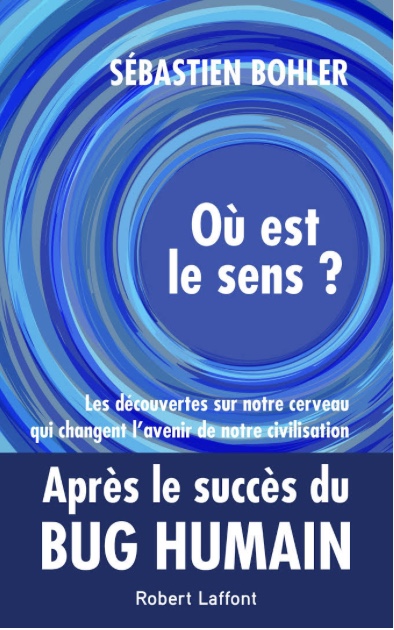
Where Is the Meaning?

WHERE IS THE MEANING?

By Sébastien Bohler

November 2025

“As humanity has equipped itself with the technological means to meet its material needs, it has neglected the question of meaning. Of reflecting on our presence on Earth. Where we come from, where we are going. How we can live together, connected to one another. How the depth of time writes our history and allows us to shape our future. What we can pass on to our successors. What is the coherence of our lives and what values are we prepared to defend. We thought we could live without it. Materially nourished by industrial agriculture, supported by household appliances, occupied by screens, and healed by medication, we thought we had it all. But in reality, we have lost almost everything. And today, we are struggling to wake up.

To compensate for the void of meaning, we increasingly and unconsciously throw ourselves into consumer behaviors that lead nowhere. We gorge ourselves on food, distractions, comfort, cars, and connected devices, always demanding more because we don't know what else to do with our lives, and because it's the only widely accepted commandment in our society, the only one we've grown accustomed to subscribing to, or the only one we've been taught to subscribe to in order to lead a successful life. Between a yoga session, a business meeting, a visit to the phone store, and an evening watching our favorite series, the life of the Western man is punctuated by these preoccupations. And these goals are shared by all those who, living in emerging countries, fundamentally desire only one thing: access to these same conveniences.

If we continue to live this way, the Earth will be dead to us in a century.

We are therefore facing a fatal deadline. We are beginning to realize this. (…) At the same time, we feel that our individual lives are precarious, that work is scarce and jobs fragile, that states are less protective of citizens and are everywhere giving in to the law of the market and free competition to the detriment of public services, whether in education, healthcare, or transportation. Faced with this disaffection, individuals are turning against each other, demanding more recognition, dignity, purchasing power, and autonomy. Minorities are becoming more vocal, whether vegans, LGBTQ+ people, the Yellow Vests, or students. We feel that all of this is connected and that, fundamentally, we can no longer maintain a civilization based on individualism, competition, profit, and consumption.

After presenting, in June, Viktor E. Frankl's "Man's Search for Meaning," which is actually an introduction to Logotherapy, a method the author developed in the 1930s, we return to the theme of the search for meaning, this time with a different approach. Sébastien Bohler offers his definition of meaning and then traces the history of this human quest. He presents uncertainty as the opposite of meaning and describes how it has recently permeated our daily lives. The cingulate cortex, which seeks to forge a clear path in its environment, is challenged by this uncertainty. Finally, he examines the current challenges and the responses humans are attempting to provide.

You will find excerpts that particularly interested me and summaries of the book's main ideas below.

Illustration de l’article

  • Meaning

When a living being is able to predict what will happen based on its observations, it greatly increases its power of control and decision-making. It can seek out the most advantageous situations and avoid those that are potentially dangerous. It is one step ahead of reality. Prediction provides control. This ability to establish links between the state of its environment at a given moment and its future state is the basis of what, in a highly cerebral species like humans, we call meaning.

The child begins to control its environment and even its own destiny, thanks to its ability to create meaning within its social and emotional surroundings. For the child, human society has meaning: it knows that one can be accepted and find its way within it, provided one respects its rules and codes. This society is not given over to chaos; it has order, and this order is intelligible.

Observing, predicting, anticipating future events, reducing anxiety: all of this contributes to the notion of meaning.

Faced with a void of meaning, how does the human mind react? It constructs systems of representation imbued with significance, order, and coherence. Since the dawn of humanity, we have been imbuing reality with meaning. The first attempts took the form of mythical narratives of creation and nature. Indigenous peoples had their cosmogonies, their pantheons of deities, with varying degrees of power and benevolent intentions.

All these deities had a function, a sphere of influence, a relationship with the elements, and channels of communication through which it was possible to connect with them and seek their favor. These entities allowed our ancestors to have both a stable and coherent vision of reality and the means to control it.

Once you convince yourself that nature obeys laws, the feeling of uncertainty fades. Believing that the world was created according to a design implies that it is ordered and that there must be a way to influence it, by being in the favor of its creator.

Most origin stories in polytheistic religions describe an initial chaos that was ordered by superior forces, often gods. This is particularly true of Greek, Egyptian, Sumerian, and Nordic mythologies. Even more concerned with meaning, monotheistic religions have taken this pursuit of order further, decreeing that a monolithic deity simply created the universe ex nihilo according to a resolutely ordered and profoundly meaningful plan, where every stone and every grain of sand was intentionally planned. These religions are, in fact, called religions of the book, because the underlying meaning is written in black and white, engraved in stone, as it were, unalterable and impervious to the ravages of time. By “meaning”, we must understand here "the set of codes, precepts, and rules of life which, when correctly applied and respected by the individual, give direction to their existence and promise them both integration into the community of believers and, in the case of certain religions such as Christianity or Islam, eternal life in another world. Life itself then has meaning, and the small chance occurrences of daily life become insignificant in the face of the supreme design that governs the natural order."

Nothing is more unbearable than the feeling of powerlessness in the face of a phenomenon we cannot control and whose outcome we cannot predict. The need for meaning arises from the need for control. It is an emanation of our desire for survival.

Meaning has undergone several transformations throughout human history. We know the first of these, which occurred during the great turning point of the Neolithic period, about ten thousand years ago. Humanity then shifted from a cosmic meaning to a social meaning. The cosmic meaning was probably that of the Paleolithic hunter-gatherers; it was a meaning of origins, of nature, of the stars, and of animal spirits. It was also, undoubtedly, a representation of the world that played a calming role, the idea that the universe obeys an order and is not subject to chance and chaos. This sense satisfies our need for discernment, clarity, orientation and control over events once we have populated it with deities who, as we now know, soothe the activity of the human cingulate cortex in the face of the unknown and the indistinct.

With the first shift in meaning and the transition to a social understanding, the first great civilizations emerged. They developed with cities, new types of human concentration, and above all, the anonymity of the crowd. In the human gatherings of Uruk in Mesopotamia, Tenochtitlan in Central America, Giza, and Harappa in the Indus Valley, we know that collective rituals became the cornerstone of social life. These synchronous practices helped to soothe a cingulate cortex overwhelmed by the influx of thousands of strangers whose intentions and mental processes were impossible to predict. It is from this era that we date the first moral deities, entities defining good and evil, principles for regulating relations between humans themselves, and no longer solely between humans and gods. From this moment on, the moral norm, that of the group in which the sacred is embodied, became the ultimate meaning of existence.

• Uncertainty

In the world of traditional business, suddenly thrust into "mobility" under the pressure of a competitive market, routines are shattered, safeguards are broken, and the brain is confronted with one of the most terrifying anxieties imaginable, one that resurrects the ancestral fear of death and loss of control: uncertainty. Uncertainty is the absolute opposite of meaning . Employees experiencing psychological breakdown, of "burnout," in whom the equivalent of Jules Masserman's experimental neuroses is induced, find themselves like a Paleolithic hunter suddenly discovering that the trails of large predators have been obscured: they can no longer predict anything, and this means that the predator may be just a few meters away. They literally feel the breath of death at their back.

Scientist Martin Lang believes that our brain seeks to reduce the degree of disorder in its environment.

Uncertainty kills. It undermines our brains, it destroys the fundamental human yearning for meaning. Global competition is shattering the last vestiges of stability; institutions are not responsive enough, they barricade themselves behind the sovereign functions of the army and the police, whose ramparts are nonetheless shrinking inexorably. The end of the line.

Today, the shaking of the world's pillars is causing an earthquake deep within our souls. When the very framework of our life crumbles before our eyes, when the natural environment goes up in smoke and the world's usual order dissolves, new forms of suffering emerge. One of these is eco-anxiety, this new form of anguish resulting from the paralyzing awareness of our planet's destruction. This concept was initially called solastalgia. Those who suffer from it experience depression, memory problems, a loss of spatial awareness, and a detachment from themselves and others. Solastalgia arises in the face of the disintegration of the ecosystem, of living things, of mountains and rivers, but it also manifests itself in the face of any abrupt changes to our familiar environment.

Humanity is cornered. To the uncertainties surrounding employment, family, and health is added the promise of a major upheaval of the world as a whole. We have entered an era that no one wants to go any further, have conceived a future that no one wishes to encounter, a world toward which we are moving backward, striving not to think about it. So, tormented by our own conscience, overwhelmed by the purgatory we have built with our own hands, we become like Masserman's cat: we slip into behaviors of flight, repetition, and obsession. Actions which, repeatedly and stubbornly, prepare the way for the great final destruction. These are what we must now call the pillars of madness.

The cingulate cortex seeks to anticipate the future and chart a clear path through its environment. The more bifurcations there are, the less tangible the order becomes, the more entropy increases, and the less reliable the predictions. From this perspective, indeterminacy is a form of uncertainty, and perhaps the worst: it stems from uncertainty about our own choices.

• What palliatives does humanity seek in the face of this situation?

• Collective Ritual

The first stage of the social rocket that allows individuals to better predict the behavior of their peers is ritual. The second is moral values. Collective ritual has enabled the establishment and sharing of moral norms. It has been established that in all the major basins of civilization of the Neolithic and then of High Antiquity, the appearance of so-called doctrinal rituals (strict ritual practices, repeated at a high frequency, daily or weekly) preceded by several centuries the appearance of the great moralities based on monotheisms.

The transition from synchronous ritual to the sacred seems natural in human societies: simple experiments show that when a group of people regularly engages in an activity involving synchronized gestures and spoken words—whether ritual words in a yoga session, chants in a choir, or choreographed movements in a capoeira class—they not only feel part of a close-knit community (what is referred to as entiveness), and become more generous toward one another, but also begin to declare that their practice and values are sacred in the sense that they have become essential to their lives and form the basis of their relationships with others.

Furthermore, in a crowd of several hundred or thousands of people performing the same gestures and uttering the same words, the unpredictable and anxiety-inducing nature of individual behavior suddenly vanishes.

• Moral Values

Unlike “amoral” deities (such as the gods of the ancient Greek or Egyptian pantheons), moral gods—who are also most often unique—promulgate commandments that are themselves morally charged. These gods are thus guarantors of values and norms that govern human relationships with one another, and not only with the deity itself or the natural order. They are true social regulators.

Moral values are the magic formula for regulating the behavior of others, and as such, they constitute a powerful calming factor for the cingulate cortex, which seeks to orient itself among its peers. Thanks to them, this part of our brain has found a way to control others, beings so unpredictable by nature, opaque, and uncertain. It does so, literally, through the application of norms to which individuals adhere intellectually, emotionally, and viscerally, and which strongly constrain the nature of their actions.

Being aware that others feel, think, and suffer as we do will be the source of a major turning point in human history. From that moment on, commandments like "Thou shalt not kill," "Thou shalt not steal," and "Thou shalt not covet thy neighbor's wife" take on meaning. They relate to other human beings. They establish a morality in the truest sense, a relational guide based on the beginnings of empathy. The cingulate cortex finally glimpses the light at the end of the tunnel: if humans have a morality, if they begin to distinguish good from evil, they become much more predictable. For morality to be effective and operational, all that is missing is a code: a text that states the moral norm and gives it legitimacy. This legitimacy will be provided by God. Humans will delegate to a transcendent and monolithic entity the task of imposing this code on all minds.

Morality is the stage at which human meaning has stalled. It is the cement of social meaning.

The term "moral system" signifies that the system defines good and evil, which should serve to regulate social and individual action.

Good and evil must shift their focus. They should no longer be defined according to ancient transcendental sacred texts, but rather according to the compatibility of our daily actions with the sustainability of life on Earth.

• Religion

The power of God essentially rests on a wager humans make: "I believe that others believe the same thing as me." For the cingulate cortex, the most important thing is not so much believing oneself, but believing that others believe. This is the essence of religion. Everything hinges on this. There can be no belief except a shared one. Belief is only valuable because it allows us to form reliable expectations about the actions of others. This is how the cingulate cortex survived, and allowed us to survive: by predicting the behavior of others, by betting that they are inhabited by the same beliefs and the same worldview as ourselves.

From the moment everyone believes that God exists, this allows our brain to make certain predictions (admittedly not always extremely reliable…) about human behavior in large societies, which are increasingly the norm in major civilizations. It also helps to reduce social uncertainty and to alleviate the anxiety associated with this uncertainty in an environment that is difficult to control.

Eternal life and the very idea of an omnipotent God are not the most fundamental criteria for discussing religion and the sacred. The strength of the bond of belonging, the sharing of a common worldview, and the notions of sacrifice and ritual are far more important in this regard.

• Science vs. Religion

The meaning provided by science does not possess quite the same reassuring power as that provided by religion and morality. Science introduces a factual meaning, but not—at least initially—a moral one.

Why did we seize without reservation the opportunity offered by the material control of things through technology, without questioning what we would lose in terms of meaning? Because meaning was fundamentally only useful for the survival of our species as long as our means of technological control over nature were negligible. Meaning was merely a palliative for our lack of technical and scientific power.

• Need for belonging

Defining oneself through one's relationship to a group fulfills a fundamental need: finding a way to conform to established rules, which will limit the untimely reactions of the cingulate cortex. Once you have adhered to codes of belonging, this cortex will only activate if you break those codes. It is therefore not surprising that the more acute an individual's uncertainty about their own identity, the more they will exhibit behaviors aimed at confining themselves to a social category (self-categorization), barricading themselves in a group and not leaving it.

In short, lacking a personal identity, one seeks identity in the collective. At first glance, there's nothing wrong with that, but the trouble begins when one tries to define the group by comparison with the rest of humanity. To do this, the group must establish clear, strict, and homogeneous markers of belonging within its boundaries, immediately distinct from other codes in force among other social groups. In other words, in the literal sense, to be effective, these markers of distinction must be discriminatory.

The homogeneity of the group is of paramount importance for calming the anxiety linked to self-doubt, the kind that concerns the individual, their difficulty in defining their uniqueness, their personality, and their future. When things are truly dire, when your country has been humiliated and its inhabitants no longer really know who they are, you have to bring out the big guns in terms of homogeneity: racial purity. We've seen what that led to.

For our ancestors, survival in hostile environments always depended on the ability to blend into a group. Before inventing self-esteem and the material and technological means to cultivate it, Homo sapiens relied on external symbols of group belonging to soothe this primal fear. Feeling that we depend on others and that others depend on us becomes essential to containing the distress we experience in the face of nothingness.

The need for belonging is probably the only bulwark that can still protect us from the anxieties linked to our mortality. The challenge today is to create a sense of global identity that gives everyone the feeling of being accepted into a group, without them needing to prove their worth and eligibility through the accumulation of material possessions or ego-boosting devices.

• Current Challenges and the Reactions That Follow

• Globalization and Identity

It is no coincidence that globalized society, subjected to competition in all sectors of the economy and the acceleration of trade and production rates, is also a society of identity withdrawal, Brexit, America First, communitarianism, and populism—Italian, Brazilian, British, American, Hungarian, Polish, or Russian. Globalization has amplified individuals' uncertainty about their identity and their future tenfold.

Faced with this new reality, the automatic reaction of their cingulate cortex is to recover a fragment of identity and certainty through social codes and norms specific to their group. Living in a society where it is possible to adopt dress codes, verbal codes, and mental codes similar to those of other members of your community is reassuring. An order emerges. Simple, mimetic, easily recognizable. It is a profound reduction of chaos.

• Inequality and Anomy

For the vast majority of losers in the great game of wealth accumulation, the prevailing feeling is that social structure has collapsed. It is terrifying to see that the state no longer plays its regulatory role and that society itself has become nothing more than a jungle given over to chaos. The sociologist Émile Durkheim used a term to describe this situation more than a century ago: anomy. The word anomy refers to the feeling of a loss of order and logic in society. Durkheim predicted that, faced with anomy and the disintegration of social structures, modern individuals would turn, as compensation, to caricatured and expeditious solutions that give the illusion of clear order. It is the authoritarian leaders, the strongmen, often demagogues, who promise a swift and seamless return to order. They will be called populist leaders.

• Inequalities, Consequences

Anthropology has taught us that humans are conditional cooperators, capable of immense sacrifices provided they are convinced that everyone is playing their part. Social justice is, for this reason, an absolutely essential condition if we wish to abandon the ideal of growth and purchasing power that is destroying us. For the citizens of our societies, it is a matter of being convinced that no one, from the CEO to the real estate agent to the President of the Republic, enjoys financial or material advantages or is exempt from the sacrifices required of everyone. (...) The preferential treatment, the privileges of the powerful, the salary gaps of a factor of one hundred, the taxation favorable to the wealthy and the galloping rise of inequalities: all this stifles in the bud any desire for collective sacrifice since the desire of human beings is to sacrifice themselves for the community in order to belong to it, and to know that others manifest the same desire for belonging as they do and are ready to manifest this desire through the same sacrifice.

• Conservatism

Traditionalist, conservative, and stable worldviews, which even deny the reality of change, offer reassurance in a profoundly shaken world. Conservatism provides a safe haven when a social context changes too rapidly.

By administering targeted psychological tests to left- and right-wing voters, researchers from Stanford and Berkeley found that conservative voters exhibited higher levels of intolerance for uncertainty than left-wing voters. In other words, uncertain, changing, or ambiguous situations were particularly unpleasant for them. For this reason, they tended to cultivate stable worldviews and values classically associated with permanence: family, the flag, the military, class elitism, and so on. In this way, they protected themselves against the irruption of unstable or overly fluctuating situations, always maintaining this ordered vision of the world somewhere in their minds.

• Cognitive Dissonance

The mechanism of self-justification is costing us dearly. We tell ourselves stories about reality instead of facing it. The daily activities of most people, which fill two-thirds of their waking hours, from which they earn their living and with which they feed their loved ones, clash with their rational mental representation of the future and perhaps even with their deep-seated convictions about leaving their children a reasonably habitable world. This situation generates what is called cognitive dissonance in psychology. Their actions are not aligned with their mental representations.

Situations of cognitive dissonance activate the cingulate cortex. This cortex dislikes uncertainty, disorder, or indeterminacy. It also hates contradiction. No one can live healthily under these conditions. Contradiction can exist in a human mind for a few milliseconds without causing too much damage, but not beyond that. The human brain seeks coherence and reason in all circumstances. It will therefore strive to resolve the dissonance that represents maximum uncertainty, and the choice before it is very simple: either modify its actions so that they align with its thoughts, or change its thoughts so that they are in sync with its actions.

The major discovery of research on cognitive dissonance has been to show that most of the time, it is thoughts that adapt to actions, and not the other way around.

• Loss of contact with reality and conspiracy theories

We are disconnected from reality because we no longer know how to interpret it. This stems from a lack of a shared worldview, effectively disseminated knowledge, and mutual trust.

The human brain dislikes disorder. As soon as it is confronted with a situation lacking logic or structure, it creates a compensatory order. Conspiracy theories are a way of recreating a form of intelligible logic in a world perceived as confused, contradictory, opaque, and overly complex.

When you deprive people of control over their lives by making them feel that they are replaceable, that they can lose their jobs at any moment, that they can be relocated, recycled, erased from the world of work, deprived of their rights to access healthcare, to recourse in the event of sexual assault or rape due to the indifference of society or the police; when you give young people the impression that the world of work does not want them, that the earth may no longer exist in twenty years and that they can do nothing to prevent this catastrophe; when you place teachers in front of classes over which they have no control, and where they do not know if they will be listened to and respected; When all this happens in a society saturated with incoherent, plethora of ambiguous and contradictory information due to the combined effect of social networks and the deregulated market of opinion on the internet, the result is an explosion of conspiracy theories and à la carte interpretations of the world, totally disconnected from reality.

This is the end of truth as a confrontation between discourse and reality, because these millions of brains will create their own perception of reality, like the experience of random dots on a screen.

• Existential Void

The need to flee existential questions in an era where we no longer possess worldviews to help us confront them condemns us to perpetual distraction. Not only does this erode our mental capacities, but it also condemns us to continuously fuel an industry that consumes vast quantities of fossil fuels and pollutes our environment. Our atavistic fear of death, ingrained in our genes and the deep structures of our brains, compels us to adopt behaviors that hasten it rather than delay it. All that remains is for us to deny the global destruction of our civilization and our planet by a similar mechanism operating on a collective level. We then witness this strange temptation toward denialism among otherwise remarkably educated adults who suddenly seek to reassure one another by claiming that climate change is a hoax and that those who want us to believe it are immature and incompetent, or even young Swedish girls with long braids. The discourse of those who deny global warming is ultimately nothing more than desperate constructions to ward off this globalized existential distress lodged deep within their cingulate cortex.

Conclusion

Deep within us lies an immense aspiration, yet we don't know how to fulfill it. This is the challenge of this century. Our brains have the capacity not to fully exploit nature, but to understand it, observe it, and interpret it. To give it meaning. This is our greatness. Of all the species born on Earth, we are probably the only ones capable of generating worldviews and mentally organizing our reality. We give meaning to a nature that, intrinsically, has none. This should be a source of happiness and pride.

We almost seized this destiny long ago, when humankind had only words and symbols to oppose the fury of the elements. We let this opportunity slip away because a brief temptation arose: to dominate and exploit life. We betrayed meaning, transforming it into power. We were so afraid of death that we believed it would solve our problems.

Today, we know that this only makes things worse. Humanity in the third millennium is faced with a choice between meaning and power. Power is an illusion, we know this, but we must now see it through to the end. Once that is done, we can turn towards our future.

The author adds a soothing note related to the connection with nature that we can all feel, even though it often represents only a brief but precious escape…

“To sense the underlying order of nature, through observation and wonder, is profoundly calming.

Wonder is a powerful antidote to the existential angst that grips us all in the face of impending cataclysms.” This is also a message that emerges from studies on solastalgic individuals, those distressed by the collapse of the world but who, paradoxically, while being undermined by the realization of the irreversible degradation of their environment, simultaneously discover the infinite richness of life, the beauty of landscapes, flora and fauna, and find a source of meaning in them.”

4 / 5

Man's Search for Meaning

Man's Search for Meaning

by Viktor Frankl

June 2025

Having spoken to two friends recently about this book, that I read some years ago, I thought I would take the opportunity to present it in this forum.

Psychiatrist Viktor Frankl's memoir, on one hand, belongs to the number of important testimonies of life in Nazi death camps and on the other hand, it adds lessons for spiritual survival. Based on his own experience and the stories of his patients, Frankl argues that we cannot avoid suffering but we can choose how to cope with it, find meaning in it, and move forward with renewed purpose.

Frankl spent three years in four different concentration camps, where his parents, brother and wife died. As for the more well-known writers on the holocaust such as Elie Wiesel, Primo Levi or Jorge Semprun, the mere act of surviving came noy only from determination, but also from action. At the heart of his theory, known as logotherapy, is a conviction that the primary human drive is not pleasure but the pursuit of what we find meaningful. Man's Search for Meaning has become a very influential book in America; it inspires to find significance in the very act of living.

Beyond the first developments below, the rest is more to be grasped as "Food for thought", but it all comes from the Logotherapy way of thinking and the book...

Illustration de l’article

Just as a parenthesis, I have reproduced the author's expressing his thoughts 50 years ago, with a focus on man. Thus, it is not gender neutral, even though I'm sure he would have adapted if he had written it today.

  • Meaning of life

The meaning of life differs from man to man, from day to day, from hour to hour. What matters, is not the meaning of life in general, but rather, the specific of a person’s life at a given moment.

Each man is questioned by life and he can only answer to life by answering for his own life; to life he can only respond by being responsible. Logotherapy sees in responsibleness the very essence of human existence.

It is up to each individual to decide, whether he should interpret his life task as being responsible to society or to his own conscience.

By declaring that man is responsible and must actualize the potential meaning of his life, the  author wishes to stress that the true meaning of life is to be discovered in the world rather than within man or his own psyche, as though it were a closed system. He has termed this constitutive characteristic the “self-transcendence of human existence”. It denotes the fact that being human always points, and is directed, to something, or someone, other than oneself – be it a meaning to fulfill or another human being to encounter. The more one forgets oneself – by giving oneself to a cause to serve or another person to love – the more human he is and the more he actualizes himself. What is called self-actualization is not an attainable aim at all, for the simple reason that the more one would strive for it, the more he would miss it. In other words, self-actualization is possible only as a side-effect of self-transcendence.

The meaning of life always changes, but it never ceases to be. According to logotherapy, one can discover this meaning in life in three different ways: 1/ by creating a work or doing a deed, 2/ by experiencing something or encountering someone, and 3/ by the attitude we take toward unavoidable suffering. The first, the way of achievement or accomplishment, is quite obvious. The second and third need further elaboration.

The second way of finding a meaning in life is by experiencing something - such as goodness, truth or beauty – by experiencing nature and culture or, last but not least, by experiencing another human being is his very uniqueness, by loving him.

The third is the subject of next paragraph. " Even the helpless victim of a hopeless situation, facing a fate he cannot change, may rise above himself, and by so doing change himself. He may turn a personal tragedy into a triumph.”

“Doesn’t the final meaning of life reveal itself, if at all, only at its end, on the verge of death? And doesn’t this final meaning, too, depend on whether or not the potential meaning of each single situation has been actualized to the best of the respective individual’s knowledge and belief?”

“The perception of meaning, as I see it, more specifically boils down to becoming aware of a possibility against the background of reality or, to express it in plain words, to becoming aware of what can be done about a given situation.”

·      Suffering

It is possible to practice the art of living even in a concentration camp, although suffering is omnipresent. To draw an analogy: a man’s suffering is similar to the behavior of gas. If a certain quantity of gas is pumped into an empty chamber, it will fill the chamber completely and evenly, no matter how big the chamber. Thus, suffering completely fills the human soul and conscious mind. Therefore the “size” of human suffering is absolutely relative.

In concentration camps, everything that was not connected with the immediate task of keeping oneself and one’s closest friends alive lost its value. Everything was sacrificed to this end. A man’s character became involved to the point that he was caught in a mental turmoil which threatened all the values he held and threw them into doubt. Under the influence of a world which no longer recognized the values of human life and human dignity, which had robbed man of his will and had made him an object to be exterminated (having planned however to make full use of him first – the last ounce of his physical resources), under this influence the personal ego finally suffered a loss of values. If the man in the concentration camp did not struggle against this in a last effort to save his self-respect, he lost the feeling of being an individual, a being with a mind, with inner freedom and personal value.

Suffering is an ineradicable part of life, even as fate and death. Without suffering and death, human life cannot be complete.

The way in which man accepts his fate and all the suffering, that it entails, the way in which he takes up his cross, gives him ample opportunity - even under the most difficult circumstances - to add a deeper meaning to his life. It may remain brave, dignified and unselfish. Or in the bitter fight for self-preservation, he may forget his human dignity and become no more than an animal. Here lies the chance for a man to either make use of or to forgo the opportunities of attaining the moral values, that a difficult situation may afford him. And this decides whether he is worthy of his suffering or not.

The meaning of suffering:

We must never forget that we may also find meaning in life even when confronted with a hopeless situation, when facing a fate that cannot be changed. For what then matters is to bear witness to the uniquely human potential at its best, which is to transform a personal tragedy into a triumph, to turn one’s predicament into a human achievement. When we are no longer able to change a situation – just think of an incurable disease such as inoperable cancer- we are challenged to change ourselves.

  • Love

A thought transfixed me: for the first time in my life, I saw the truth as it is set into song by so many poets, proclaimed as the final wisdom by so many thinkers. The truth – that love is the ultimate and the highest goal to which man can aspire. Then I grasped the meaning of the greatest secret that human poetry and human thought and belief have to impart: “ The salvation of man is through love and in love”. I understood how a man who has nothing left in this world still may know bliss, be it only for a brief moment, in the contemplation of his beloved. In a position of utter desolation, when man cannot express himself in positive action, when his only achievement may consist in enduring his sufferings in the right way - an honorable way – in such a position man can, through loving contemplation of the image he carries of his beloved, achieve fulfillment.

Love goes very far beyond the physical person of the beloved. It finds its deepest meaning in his spiritual being, his inner self. Whether or not he is actually present, whether or not he is still alive at all, ceases somehow to be of importance.

Love is the only way to grasp another human being in the innermost core of his personality. No one can become fully aware of the very essence of another human being unless he loves him. By his love he is enabled to see the essential traits and features in the beloved person; and even more, he sees that which is potential in him, which is not yet actualized but yet ought to be actualized. Furthermore, by his love, the loving person enables the beloved person to actualize these potentialities. By making him aware of what he can be and of what he should become, he makes these potentialities come through.

In Logotherapy, love is not understood as a mere side-effect of sex; rather, sex is a way of expressing the experience of that ultimate togetherness which is called love.

  • Inner Feedom

“The mental reactions of the inmates of a concentration camp must seem more to us than the mere expression of certain physical and sociological conditions. Even though such conditions as lack of sleep, insufficient food, and various mental stresses may suggest that the inmates were bound to react in certain ways, in the final analysis it becomes clear. That the sort of person the prisoner became was the result of an inner decision, and not the result of camp conditions alone. Fundamentally, therefore, any man can, even under such circumstances, decide what shall become of him, mentally and spiritually. He may retain his dignity even in a concentration camp. It is the spiritual freedom, which cannot be taken away, that makes life meaningful and purposeful. “

There is a danger inherent in the teaching of man’s “nothingbutness”, the theory that man is nothing but the result of biological, psychological and sociological conditions, or the product of heredity and environment. Such a view of man makes a neurotic believe what he is prone to believe anyway, namely that he is the pawn and victim of outer influences or inner circumstances. This neurotic fatalism is fostered and strengthened by a psychotherapy which denies that man is free.

To be sure, man is a finite thing and his freedom is restricted. It is not freedom from conditions, but it is the freedom to take a stand toward the conditions.

  • Singularity

“Life” does not mean something vague, but something very real and concrete, just as life’s tasks are also very real and concrete. They form man’s destiny, which is different and unique for each individual. No man and no destiny can be compared with any other man or any other destiny. No situation repeats itself and each situation calls for a different response. Sometimes the situation a man finds himself in may require him to shape his own fate by action. At other times, it is more advantageous for him to make use of an opportunity for contemplation and to realize assets in this way. Sometimes, man may be required simply to accept fate, to bear his cross. Every situation is distinguished by its uniqueness, and there is always only one right answer to the problem posed by the situation at hand.

  • Destiny

    The story of Death in Teheran

    A rich and mighty Persian once walked in his garden with one of his servants. The servant cried that he had just encountered Death, who had threatened him. He begged his master to give him his fastest horse so that he could make haste and flee to Teheran, which he could reach that same evening. The master consented and the servant galloped off on the horse. On returning to his house the master himself met Death, and questioned him, “Why did you terrify and threaten my servant?” “I did not threaten him; I only showed surprise in still finding him here when I planned to meet him tonight in Teheran” said Death.

  • Consciousness

“We were treated like complete non-entities. The consciousness of one’s inner value is anchored in higher, more spiritual things, and cannot be shaken by camp life. But how many free men let alone prisoners possess it? Without consciously thinking about it, the average prisoner felt himself utterly degraded.”

  • Body and Soul

Those who know how close the connection is between the state of mind of a man – his courage and hope, or lack of them – and the state of immunity of his body will understand that the sudden loss of hope and courage can have a deadly effect.

  • Existential vacuum

The existential vacuum is a wide-spread phenomenon of the twentieth century. This is understandable; it is due to a two-fold loss which man has had to undergo since he became a truly human being. At the beginning of human history, man lost some of the basic animal instincts in which an animal’s behavior is imbedded and by which it is secured. Such security, like Paradise, is close to man forever; man has to make choices. In addition to this, however, man has suffered another loss in his recent development inasmuch as the traditions which buttressed his behavior are now rapidly diminishing. No instinct tells him what he has to do; sometimes he doesn’t even know what he wishes to do. Instead, he either wishes to do what other people do (conformism) or he does what other people wish him to do (totalitarism)

  • Transitory aspect of life

Those things which seem to take meaning away from human life include not only suffering but dying as well. I never tire of saying that the only really transitory aspects of life are the potentialities; but as soon as they are actualized, they are rendered realities at that very moment; they are saved and delivered into the past, wherein they are rescued and preserved from transitoriness. For, in the past, nothing is irretrievably lost but everything irrevocably lost.

  • Action

We need to stop asking about the meaning of life, and instead to think of ourselves as those who are being questioned by life – daily and hourly. Our answer must consist, not in talk and meditation, but in right action and right conduct. Life ultimately consists in taking the responsibility to find the right answers to its problems and to fulfill the tasks that it constantly sets for each individual.

  • Self-determination

A human being is not one thing among others; things  determine each other, but man  is ultimately self-determining. What he becomes, within the limits of endowment and environment, he has made out of himself.

  • Tragic optimism

What should be understood by a tragic optimism? In brief it means that one is, and remains optimistic in spite of the “tragic triad”, as it is called in logotherapy, a triad which consists of those aspects of human existence which may be circumscribed by: 1/ pain, 2/ guilt and 3/ death.

What matters is to make the best of any given situation. The best is that which in latin is called “optimum”, hence the reason for speaking about a tragic optimism, that is an optimism in the face of tragedy and in view of the human potential which at its best, always allows for 1/turning suffering into a human achievement and accomplishment, 2/ deriving from guilt the opportunity to change oneself for the better, and 3/ deriving from life’s transitoriness an incentive to take responsible action.

As we see, a human being is not one in pursuit of happiness but rather in search of a reason to become happy, last but not least, through actualizing the potential meaning inherent and dormant in a given situation.

  • Old age

It is true that the old have no opportunities, no possibilities in the future. But they have more than that. Instead of possibilities in the future, they have realities in the past – the potentialities they have actualized, the meanings they have fulfilled, the values they have realized – and nothing and nobody can ever remove these assets from the past.

In the past, nothing is irretrievably lost, but rather, on the contrary, everything is irrevocably stored and treasured.

  • Logotherapy

    Logotherapy focuses rather on the future, that is to say, on the meanings to be fulfilled by the patient in the future.

Et voilà... Read the book and enjoy it!

--------------------------------------------------------------------------------------------------------------------------------------------------------------------------------------------------------------------------------------------------------------------------------------------------May 2025

A PHILOSOPHY OF HOPE,

Lars Svendsen

Illustration de l’article

« As the world situation currently looks, there is undoubtedly reason for discouragement. Towards the turn of the millenium all the pointers seemed to be aimed equally at the sky. There is definitely less reason for optimism now than there was just a few decades ago, but that is precisely why there is all the more room for hope. Not because our hopes should now have a higher likelihood of being fulfilled, but because hope contains resources to help us deal with the setbacks we are now experiencing. It gives us goals to reach for, goals that it will also contribute to helping us achieve. »

I’m back after doing some work to try to summarize a thrilling book on HOPE, by one of the most considered living Nordic philosophers, Lars Svendsen, published in 2023 in Norwegian and English and edited by Reaktion Books LTD.

The author’s goal is not to arrive to a new definition of hope, but to offer a broad description of hope’s place in human life.

Hope isn’t something that suddenly appears from thin air in your emotional life. It has to be learned and developed. It is often referred to as a feeling, and athough hope undoubtedly has an emotional side it is probably just as connected to reason as it is to feelings. As such, hoping is neither rational nor irrational, and it can be done both well and badly. Hope is in no way the same as optimism ; one can be both pessimistic and hopeful at the same time. You can be a functioning pessimist, but without hope you simply will not live a full human life.

Hope is good because it gives people a kind of grip on the future, and thus a degree of control over life.

The word « hope » seems to have quite different meanings and values for different people. For some, to hope is to become passive, to stop believing that you can accomplish something yourself and instead indulge in a belief that external forces will ensure things go as you wish ; for others, hope is active and linked to creating possibilities, seen in an as yet undetermined future, a reality. Hope can be both of these things. Hope can also be used in many different ways and in a variety of contexts, from the extremely trivial to the deeply essential.

I found this book not only interesting by its proposition, to elaborate on hope from different standpoints, by its structure and relative easiness to understand. I also found, that it is perfectly suited in today’s context and it allows us to take a step back from an extremely dense and heavy newsflow. Hope is present in our every day life now. If not for more personal reasons for some of us, but more generally, I believe, that we all hope for several things : an end to Russia’s invasion of Ukraine and peace conditions that would be acceptable for Ukraine, an end to the devastating war against the Palestinians in Gaza that would not lead to displacing the population to build a new Riviera ( !) and, or a huge gaz and oil terminal, an end to the Trump administration’s sabotage of the American democracy… Just to name the three most obvious ones right now.

• Hope and the war in Ukraine

The direct reason why the subject of hope came back to the author was Russia’s invasion of Ukraine on 24 february 2022. What prompted him above all else to write this book about hope was the way the Ukrainian people responded. There were of course many different emotions within the population, such as rage, despair, grief and so on, but the most prominent emotion seemed to be the hope that they would be able to withstand this attack from the Russian superpower and preserve their freedom.

Ukrainian hope has mobilized the people to fight – hope fosters actions that increase the likelihood that things will turn out as hoped for. But if we really are hoping for the same thing as the Ukrainian people, we too must act in a way that demonstrates that our hope is more than empty words : we must assist them in their struggle even if it costs us something, and only a fraction of what it costs the Ukrainians. Hope obliges.

• Defining Hope

There is no agreement on whether « hope » can be in any way defined satisfactorily. The problem catches your eye the moment you look a bit closer at the literature in which hope is described as, among other things, a feeling, an emotion, a mood, a state of mind, an activity, a practice, a habit, a disposition, a cognitive process and an existential attitude, and as a combination of all these things. Some regard hope as an anthropological constant, coded into our genetic material, others as a highly changeable social construction. The literature offers a wide variety of theories and definitions. Most of these theories and definitions appear to capture essential aspects of hope. If nothing else, it tells us that hope is a complex phenomenon that will be hard for one theory or definition to capture. Perhaps what we call hope is not one unified phenomenon but several partially overlapping phenomena.

The idea is that hope is dependent on your believing something will most likely go as you wish. But the predominance of likelihood isn’t necessary at all, you simply need your wish not to be absolutely impossible.

The so-called orthodox definition of hope states that hope is a combination of wanting a certain outcome and believing that it is possible without being sure of it becoming a reality.

Hope is typically related to the power of our imagination, where we imagine the outcome and the possible ways of reaching it, and to a course of action where we do something to realize the desired outcome. Hope is also a motivating force – it often gives us a psychological boost, making us better at coping with adversity.

Hope requires an awareness that our goal will not necessarily be realized, regardless of how much effort we put into it.

Hope contains a desire, and this desire can be aimed at good or bad objects. Both the what and how of hope can be either good or bad.

Hope is linked to an object or event that is unavailbale to the sense : something that is not, but that can turn out to be. Hope is closer to imagination than sensation- it is about the possible, not the real.

One can have expectations or hopes for the future. The difference between hope and expectation apparently consists of the degree of probability that the future will bring something.

Perhaps hoping can be considered a midpoint between wishing and wanting. It is more than wishing because it has to be possible, but it is less than wanting because I am not sure if it can be carried out – it is not simply dependent on my capacity for agency.

With hope, you do not see yourself as entirely at the mercy of circumstances. Hope is liberating – but only partially, because with hope you always have one foot in the present and one in the future. Hope can be part of our freedom because it enhances our ability to create the future we want.

We should distinguish between two levels of hope since there is specific hope, directed at all kinds of desired events, end a more fundamental hope that opens up to a relationship with the world where there can be something to hope for.

The ability to hope is something that develops over time, as does the ability to speak. An infant can probably not hope, but so can children and adults. It’s hard to tell when we develop our ability to hope. We will always be able to pinpoint the time when a child first uses the expression « hope », but it would be strange to say « today my son hoped for the first time ». Hope is something that can only arise in human life after many other abilities have developed. In return it is then so intertwined with these and other abilities that it’s hard for us to imagine how they would function without being linked to hope.

Hope is a dynamic phenomenon that can constantly change in line with its circumstances.

Hope is constitutive of your identity. It is difficult to separate who you are from what you hope for.

A large amount of hope, spread over a number of different objects, seems to be a necessary condition for being a well-functioning moral agent.

• Hope as a feeling

Whether hope should be called a feeling naturally depends on what one understands feeling to be. In everyday speech hope is often referred to as a feeling, and while it no doubt has emotional aspects it also differs from most feelings since hope heavily involves rationality.

The Canadian philosopher Katie Stockdale claims that there is also hope that is characterized by negative emotions, specifically what she calls « fearful hope », which at its core is not about a desire to achieve something positive but rather to escape a threat.

To simplify the definition of what a feeling is, it is subjective (it is about a subject’s response to something), it is directed at something, it has valence (it is positive or negative) and generally has a relatively short duration.

Hope is clearly subjective. Two people can be in the same situation and have the same intellectual understanding about the likelihood of a given outcome, yet one of them can be hopeful and the other not, so it is clearly a subjective response.

Hope is directed even though we can also talk about a fundamental or radical hope that does not have an object.

Hope has a valence – it is normally positively charged.

As for duration, hope typically persists for a longer period of time than many other emotions.

Hope must also be described as less intense than most other emotions.

Hope clearly has an emotional side, but that does not mean that it should basically be described as a feeling, because it also involves one’s understanding of what can happen and what one wants to happen.

• Hope and Time

Accounts of hope often assume that hope can only be directed at the future. Aristotle writes that hope is, by definition, linked to the future, while everything in the past is linked to memory, and everything in the present to sensing. Although hope for the future is probably the most common, hope can also be linked to the past or the present. What makes it hope isn’t that it concerns something in the future, but that it is a desire for something that is only possible, not certain. I can hope that I didn’t make too much a fool of myself when I got very drunk at a party the night before, for instance.

Hope contains all three dimensions of time. Your experience of the past tells you what you can hope for in the future, and that in turn tells you how you must behave in the present to help make it come true. Hope is ecstatic – you project yourself into the future. Hope is transcendence, it goes beyond the present. To hope isn’t just a state of waiting, sitting back to see what happens, but to be drawn towards the future. It affects my actions because I already - at least partially – behave as if the future were a reality. Our ideas about the future affect our ideas about the present and make us inclined to act in certain ways. Hope is an anticipation. It draws you into an imagined future where what you want is realized. Hope anticipates where an expectation awaits. Hope can have different values, from anxious hope that verges on or is mixed with fear to confident hope that verges on expectation.

However, it is too easy to consider past, present and future as three strictly separarate axes of time, because what we call present gets its meaning from what has been and what will be : the past and the future.

We live in a universe where it is entirely reasonable to claim that the future is open, that it can play out one way or the other. We live in a universe with room for substantial hope.

• Hope and Optimism

Vaclav Havel draws a distinction between hope and optimism, saying that hope is not a belief that things will go « well » but instead that things will « make sense », however things may turn out.

Hope is fully compatible with both optimism and pessimism, as long as one’s optimism or pessimism does not degenerate into the absolute certainty that things have to go well or badly, respectively, but rather maintains that things will most likely go really well or really bad. It is easier to separate specific hope from optimism than generalized hope. For generalized hope the vague belief that things will probably go well is confusingly similar to optimism, provided the optimism does not degenerate into absolute certainty.

Hopeful optimism and pessimism can be distinguished by the predominance of probability, by whether they believe that the outcome is more likely to be good or more likely to be bad. Hope in itself does not require a predominance of probability. One can think that the likelihood of a good outcome is vanishingly small but still be hopeful. That is why there are hopeful pessimists.

The optimist is not necessarily hopeful. If I am sufficientltly optimistic – so optimistic that I totally rule out any possibility other than those I would like to see realized – there is no room for hope, because hope requires uncertainty. If, in a state of uncertainty, I believe that it is overwhelmingly more likely that things will not go the way I want but that there is a possibility of a good outcome, I am hopeful but pessimistic.

Moderate pessimists and optimists accept that our overview is always limited. We can never know the world in its totality, and we do not know how things will turn out. So they can both hope.

Nick Cave , the Australian song-writer, who, for those who don’t know him, has lost two sons (…) writes :

« Hope and optimism can be different, almost opposing forces. Hope rises out of known suffering and is the defiant and dissenting spark that refuses to be extinguished. Optimism, on the other hand, can be the denial of that suffering, a fear of facing the darkness, a lack of awareness, a kind of blindness to the actual. Hope is wised-up and disobedient. Optimism can be fearful and false. However, there exists another form of optimism, a kind of radical optimism. This optimism has experienced the suffering of the world, believes in the insubordinate nature of hope and is forever at war with banal pessimism, cynicism, and nihilism. »

• Hope and Rationality

To hope might immediately seem irrational because it involves putting one’s trust in something that is highly uncertain while knowing that it is uncertiain. Wouldn’t a more rational approach to life be to instead base your expectations on things that are certain, and take any good outcome beyond that purely as a bonus ? That might seem to be the case but it might also be possible that hope itself makes a better outcome more likely than certainty alone.

A standard argument against hoping is that if you don’t hope, you won’t be disappointed if things don’t work out, but you can still be fully satisfied if things do. By not hoping, you eliminate the risk of disappointment while maintaining the possibility of benefitting. Such an assumption is dubious because it views hope as being detached from our actions when in many cases hoping for X will promote actions that increase the likelihood of X being achieved. How hopeful an individual is becomes a strong predictor of how well this individual will succeed in realizing life goals, such as having well-functioning relationships, mastering an education and a professional life, finding life meaningful and so on. Hopeful people also experience setbacks and failure and suffer accidents and tragedy, but the likelihood of achieving what you want in life is far greater if you are hopeful than if you are not.

Hope will have reasons. Hope can be more or less justified. Those who hope can be so out of touch with reality that their hoping is little more than wishful thinking or escapism. However, it is not irrational to hope if your hope contains a reasonable understanding of the likelihood of success. Hope will take more than having a realistic understanding of the likelihood that what you want will come true. You must also have patience, because it can take time ; it can require endurance, because the road ahead can be difficult ; it can require courage, because the road is dangerous ; and so on. In short, hope can not be understood independently of other qualities.

• Hope and Self-Deception

When you want something to be true you don’t absorb information that suggests that it actually isn’t true. We all have a confirmation bias, which means that we have a tendency to look for confirmation of what we already believe to be true, and we are not especially open to the fact that there is valuable information that contradicts our existing beliefs.

When you have hope you look for confirmation that your hope is justified and ignore information that suggests the outlook is worse. If you’re going to hope, you have to hope realistically, and that depends on you being able to fight your own confirmation bias.

Hope only becomes self-deception when we, in one way or another –despite our better judgement and despite there being information we have good reasons to trust – consider something impossible to be possible, or dramatically overestimate the probability of a desired outcome.

• The opposite of Hope

Several candidates come to mind : fear, dispair and apathy. Fear and hope are symmetrically related in that one imagines a future situation to be avoided, while the other imagines a situation to be achieved, but in both of these cases the outcome is uncertain. Despair, on the other hand, is characterized by certainty that something important has fallen apart, or is going to – in despair, there is no possibility for things to go well. Apathy is a state beyond despair where one is not even interested in what could have been. Both hope and fear have an open future, while the future of despair and apathy is closed.

• Politics of Hope

Peoples’ political convictions are based less on philosophical theories than they are on fears and hopes. Whether hope or fear motivates us politically makes a difference because only a society based on hope rather than fear will be capable of being free. At the same time it is crucial that political hope is kept in check, not least that it accepts people as they are instead of presupposing a complete transformation of human nature. Utopian hopes that leave no room for anything but model citizens are recipes for political disasters.

In his political treatise, Spinoza writes that state laws should be designed such that « people are restrained less by fear than hope of something good which they much desire ». In this way, citizens will perform their duties willingly. Spinoza agrees with Hobbes that only feelings of fear or hope can convince people to respect the social contract. To the contrary of Hobbes , who stresses that nothing makes citizens less inclined to break the law than fear, Spinoza sees the exact opposite : a regime of fear will inevitably create unfree citizens. Only hope can form the basis of a free society.

When Spinoza turns away from fear towards hope, it is paradoxically enough because fear creates hope. The trouble is that fear promotes the wrong kind of hope. Frigthened people will look for something to hope for, but they will hope irrationally and become easy prey for political leaders who are able to mobilize this fear. By scaring the population, these leaders can portray themselves as saviours : the only things standing between the citizens and the abyss. If the population allows itself to be manipulated in this manner, there are almost no limits to what it can accept and maintain as true and good from its leader. It becomes politically irrational and unfree.

When Spinoza emphasizes that security is one of the State’s most important tasks, he is referring to not only physical security but psychological security as well : freedom from fear. A State that gives itself legitimacy and secures obedience of its citizens through fear undermines democracy because the strategy of fear undermines the freedom that is at the core of democracy.

Hope is constitutive for a political community, because we gather around what we hope for ; and it plays an instrumental role in that it increases the likelihood of achieving specific political goals, because we are pulling in the same direction. Citizens cooperate with each other and with the authorities because they hope it will be to their advantage. They could also be pressured into cooperating for fear of sanctions, but hope is preferable since it expresses the citizens’ own will and consequently their freedom as well.

For a liberal democracy to function, its citizens must be able to hope that they can influence society to move in a direction they find desirable.

In the American pragmatist John Dewey’s democratic experimentalism, hope consists of citizens believing strongly that they can solve problems collectively, step by step. Democratic hope is a hope that democratic processes can lead us towards a better world. It is a genuine hope : it offers no guarantees. The content of this hope is left open because it depends on what problems might be preessing at any given time.

• Hope and Trust

In democratic societies, we depend on each other in order to achieve political goals. We need trust. Trust requires hope. It may be even more accurate to say that trust is a form of hope.

But it is a form of hope distinguished by us not only considering it possible that our fellow humans will act as we expect but believing that they will do so. Nevertheless, trust comes about within the framework of hope because you know there is no certainty your fellow human acting as you expect. Trust is always associated with a risk. Here we should distinguish between blind and reflected trust. Blind trust is characterized by the fact that, despite knowing better, one ignores the risk of disappointment ; one trusts something or someone unconditionally without considering that there may also be reasons to not show trust. An example of this trust is the entire uncritical relationship cult members tend to have with their leaders. Another example could be the limitless trust some political leaders have in their followers. For ardent Putinists and Trumpists there is simply nothing their political role model can say or do, no matter how crazy it may appear to outsiders, that will shake their trust. It is a form of trust that leads to fact resistance because it is not susceptible to any counterarguments. This form of trust is also defined by a complete mistrust of anything that deviates from the glossy image of one’s ideal. Why this form of trust is not desirable is obvious : in reality, it means being unenlightened and immature. As Kant wrote in his famous essay « What is Enlightenment ? » : « Immaturity is the inability to use one’s understanding without guidance from another ». Anyone who actually uses their common sense can hardly claim that Putin is a man to be trusted. And Donald Trump has lied so much that his words have no value.

A society can function somewhat, albeit not well, with minimal trust - as totalitarian regimes have shown - but a democratic society cannot function without trust, without citizens being confident that their basic rights and freedoms can be protected. Without such trust the democracy is built on shaky ground. On the other hand, it is important to stress that a measure of distruss is crucial for democracy, not least in that citizens shouldn’t just blindly trust the political leadership but rather be able to subject them to scrutiny. One might say that you have to create room for democratic mistrust in order to create democratic trust. Democratic leaders ask for reflected trust ; authoritarian leaders demand blind trust.

• Losing Hope

The phrase « While there is life, there is hope » originates from the Greek poet Theocritus.

Based in the word’s origin, a person without hope is « desperate » (from the latin desperatio, which is made up of de, "without ", and spes , "hope "). Today, this is not how the term « desperate » is normally used ; it instead describes a kind of hyperactive hope that has run wild and a person who is clinging to every possibility. In this sense, being desperate is the opposite of being without hope. A desperate person does not necessarily act rationally but rather satisfies the criteria for being hopeful.

Hope can appear on two levels and it can be lost on two levels. We ought to distinguish between losing specific hopes and losing the ability to hope : in the first instance you may lose one or more hopes. This might be because you realize that what you are hoping for is unlikely to come true. Another possibility is that you lose hope because you have evolved. Ultimately you can lose all hope such that you no longer know what to hope for. But even if you have lost all hope, as there are no objects visible to you, it doesn’t necessarily mean that you have lost the ability to hope.

In the case of stories of prisoners in Nazi concentration camps, whether it be Primo Levi or Victor Frankl for example, their descriptions of daily life in the camps are not characterized by resignation, but by small projects, attempts to exploit opportunities to keep them away from doom, and all these projects imply hope.

Even if specific hopes are lost, one can still relate to the world as somewhere one can hope, where one can hope to be able to hope again.

• The humility of hope

To live well one must be able to handle the trials that life inevitably presents. Hope helps us with that. Those who hope will often fantasize, imagine things that have not yet occured and perhaps just might. These imaginings make it easier for us to endure adversity. At the same time, it is crucial that we do not lose ourselves in hope in the sense that we focus so exclusively on the future that we overlook the present.

We have to settle for living with possibilities because life offers no guarantees, except that one day it will end.

Within hope lies humility, anknowledgement that much of what is of great importance to us in life is beyond our control.

Hope can make dealing with life’s trials easier because it gives your gaze something to hold on to, somewhere you can put these trials into a larger context. It means you are not entirely at the mercy of the pain you feel here and now.

• Hope and meaning of life

Meaning in life comes from caring about something, and those who care become vulnerable. A life without vulnerabilty is a life without meaning.

Hope gives an experience of meaning. By definition, it carries no guarantees that things will go as you wish, but it gives life direction ; it moves you forward.

We strive for hapiness but we do it for more than for our own benefit, and we strive for more than hapiness, namely meaning.

I hope I can be of use, that I might contribute a little to making the world better for someone. I hope I will live a good life, and a good life consists of more than well-being. In order for my life to seem justified – to myself of course – I must accomplish something that has a meaning beyond my subjective satisfaction. I have to care about something other than myself.

• Philosophers and Hope

Philosophical writings on hope are limited because philosophers have been largely quite sceptical about the phenomenon, which is probably due to the fact that they tend to be fond of certainty and absolutes, while hope is uncertain and limited.

Philosophy, after all is said and done, is about self-examination, working on one’s own thoughts and ways of looking at things, and for this work to have real value it must play a role in how one chooses to live. The excerpts below just give a brief idea of what different philosophers have thougt and said about hope.

o ARISTOTLE

Hope seems to be characterized by an exposure to risk, but in a way where one is not immobilized and instead seeks opportunities for action.

o BOLLNOW

The German philosopher Bollnow draws a sharp distinction between the individual hopes, which can be imagined and occur in a variety of ways next to each other, and the state of being hopeful, which has no corresponding object. This is a distinction between an intentionally determined feeling and an intentionally undetermined mood. The individual hope is something that can be fulfilled or disappoint precisely because it is aimed at something specific in the world, an event or subject-matter. The mood of hope, on the other hand, is aimed at the world as a whole, as a place where one can actually hope. This mood can also be lost, and it is something far more all-encompassing that the loss of an individual hope.

Bollnow describes the future for the person hoping as something that appears to « helpfully meet humanity and not allow it to crash into the great nothing ». The point is that hope – even if it’s directed at something you can’t quite see, a possible future – puts solid ground under your feet. It gives you confidence in life and makes actions possible. Therefore, he writes, hope is « the ultimate condition for life ».

o CAMUS

« There is so much stubborn hope in the human heart. The most destitute men often end up accepting illusion ». When hope is so stubborn, it is precisely because it is a crucial part of human agency, but all hope is not illusory.

Camus’ position is that this world, with all its imperfections, is all we have, and what we can accomplish in this world is limited, but it is from these limits and imperfections that a meaningful life can arise.

o DESCARTES

Hope is a notion that something will be good for us, but where its is only probable, not certain, that good will be achieved. Precisely because the outcome is uncertain, hope will always be accompanied by fear.

o Hans-Georg GADAMER

The German philosopher describes hope as « a fundamental structure in our awareness of life, without which we could hardly be able to carry the burdens of life ».

o HEIDEGGER

According to Heidegger, our way of being in time is characterized by the fact that we have a relationship with our past and our future, and that we are in the world in a present that also contains the other aspects of time. We hope in the present but what we hope for will inevitably be co-determined by what has been.

o HOBBES

The British philosopher Thomas Hobbes writes : « Appetite with an opinion of attaining, is called hope ». Hobbes seems to think that hope is only possible if one believes that it is most likely that what one is desiring will occur.

o HUME

Locke’s philosophical heir, David Hume, also claims that hope requires a preponderance of likelihood. According to Hume, hope is a feeling or, to be more precise, a mixture of pain and pleasure. He writes : « Tis evident that the very same event, which by its certainty wou’d produce grief or joy, gives always rise to fear or hope, when only probable or uncertain. » The certainty of a good brings pleasure, while the certainty of an evil brings pain. Since hope is linked to uncertainty, it becomes a mixture of the two.

o KANT

Immanuel Kant claimed that the question of what we can hope for is one of the three main questions of philosophy. In « Critique of Pure Reason » (1781) he writes that all the interests of reason unite in the following three questions :

What can I Know ?

What ought I to do ?

What may I hope ?

Our reason cannot oversee all causal relationships, so we cannot say with any certainty how humanity will ultimately fare, and this in itself creates room for hope. Kant claims that we are morally obliged to hope because hope is a necessary requirement for our moral motivation. Without hope we would resign instead of act as morality requires us to act. Is this a rational basis for hope ? Kant thinks so – at least, that it isn’t irrational. As long as the object of a hope is not impossible, it isn’t irrational to hope.

o LOCKE

The British philosopher John Locke defines hope as a sense of desire caused by the idea that one is likely to experience a future pleasure.

o John Stuart MILL

« A hopeful attitude to the world spurs our faculties and keeps them in good working order ».

o NIETZSCHE

Nietzsche is definitely sceptical of hope when he comments on the myth of Pandora, claiming that hope is the greatest of all evils because it prolongs human suffering.

He highlighted the Greek Stoic Epictetus as an ideal : he was self-sufficient precisely because he did not hope for anything. Epictetus’ life advice was that one should not strive to make things happen as one wishes but rather wish that they happen exactly as they happen.

o POPPER

We have a duty to try to create a better world, and this requires us to believe that creating a better world is possible.

o SCHOPENHAUER

It is hope that fuels our desires, and these desires are what really causes us pain. The solution must therefore be to minimize hope so that the desires vanish too and cannot cause us further suffering.

o SPINOZA

Spinoza aims to show us how to lead a happy life, but he makes it clear that hope is not a part of this happy life because such a life must be rational, and hope will always be an expression of irrationality. He believes such irrationality will also make us unfree.

He claims that whoever has genuine insight knows that every event happens with necessity : the future is just as determined as the past.

Hope is equally a sign of a person’s lack of insight into the world’s nature, and one should try to free oneself from the powerlessness that hope expresses and instead be guided by reason.

At the same time, for Spinoza, hope is a variant of joy, and thus something that increases our power, while fear is a variant of sadness, and thus something that weakens it.

Et voilà...

5 / 5

L'Ère de l'individu tyran

L'Ere de l'Individu Tyran

by Eric Sadin

March 2025

Beyond all reasons for the societal regression, that we witness, a pattern has developed ever since the "Enlightenment" towards more individualism. "L'Ère de l''Individu Tyran", which second title is "La Fin d'un Monde Commun" by the young French philosopher Eric Sadin, examines the powers behind this evolution to find explanations to our behaviors within our groups and communities.

Illustration de l’article

This is the book, that I probably have spoken the most about since I read it the first time in 2021. What follows is, I admit, a quite cumbersome attempt to summarize what I have found are the most interesting ideas developed by the author.

  • Origins of Liberal Individualism

If a new condition of the contemporary individual has recently fully taken shape, it is above all the culmination of a long process, which goes back a long way, more than two centuries, and which takes its origins in a philosophical and political doctrine which, particularly in the West, has shaped our habits and our culture: liberal individualism . This current, hatched at the turn of the 18th century, which enjoyed theoretical success at the time of the Enlightenment and which intended to respond to the aspiration of humans to free themselves from their yokes, to encourage the expression of their own judgment and to establish the principle of their autonomy, within a society dedicated to ensuring equality of rights and the best general interest.

From its origins, liberal individualism defended and endorsed legal equality and de facto inequality in the same movement. It intended both to preserve the inheritances acquired by birth and to encourage private initiative, while refusing to organize the conditions for a good balance between the resources of each person, on the pretext that society, one day or another, will end up taking advantage of the wealth of some, in accordance with a dogma which would experience great fortune for a long time. This conception was present in an exemplary manner in the considerations of Tocqueville who believed that “democratic individualism” would inevitably contribute to establishing ever more equality between citizens.

The reality was less happy: it would see a world paved with disparities, but which everyone could, in theory and through their efforts, rectify to their advantage. It is this doctrinal assembly which will give its robustness to the overall scaffolding. This ideological current will prevail, knowing how to bring together a number of forces around it to begin to fully flourish at the dawn of the 19th century.

Its law, soon to be dominant, would be announced by the voice of Thomas Jefferson, who became president of the United States in 1801, who, in a typically Protestant-entrepreneurial faith, argued that everyone is the “free government of him/herself”. In a country, which power was going to be built on individual audacity and risk-taking. This credo will therefore structure the march of the great industrial nations, organizing the growing rise of the bourgeoisie as much as the accumulation of capital by a minority.

Very quickly, the process of individualization – originally coming from a humanist spirit and supposedly animated by an ideal of freedom and harmony – became confused with the institutionalized quest for profit. Because what has happened is ever fiercer competition between people, the expression of particular interests, the generalization of glaring injustices and degrading working conditions.

So many phenomena which continued to generate – among most – the cruel sensation of a gap between an apparently luminous initial promise and the daily realities experienced, as well as strong opposition, political and social tensions, regular uprisings and the increasingly widespread feeling that this equation so much praised by some turned out to be unfair for the majority.

In this, the modern social contract was missing terms – mainly that of the imperative of fairness. From then on, the equation turned out to be truncated and biased. This is why positions soon emerged promoting models based on completely different aspirations. Socialists, anarchists, and also certain so-called “conservative” currents, will denounce a philosophical-political deception, as much as the advent of a “society of individualists” working towards “spiritual” and social decomposition. They will want to defend the values ​​of moderation, proximity, solidarity, even, like Proudhon, that of federative and fraternal association. However, despite all the attacks to which it was subject, democratic individualism, supposedly built on a happy tension between free self-determination and the general interest, took on such a power of promise that it almost took rank of incontestable truth.

The political project of liberal individualism which, two centuries earlier, had aspired to the emancipation of beings, has since definitively transformed into another ethos: that of the frantic quest for the singularization of oneself with the sole aim of standing out from the crowd, now seen as the determining competitive advantage.

  • Disconnection between the individual and the common whole

The 2010s will have marked a continued disconnection between individuals and the common whole. For the first time in history there appears such a split between individuals and what relates to a community of destinies made up of stories, representations, imaginations, customs, ways of living, rules and laws having value of shared bases.

From then on, and as a counterbalance, links were formed between people feeling wronged within groups of various kinds able to offer relays of solidarity and defend all kinds of particular interests. As such, demands of a new type have appeared, not intended to apply to all, but to satisfy congregations who believe they have suffered, or are still the subject of, injustice and who now intend to obtain – willingly or by force – repairs. The suspicion felt towards regimes, seeming, generation after generation, to favor only a minority, generated the faith according to which salvation would come from struggles that became community, favoring the growing affirmation of a primacy of belonging to clan affiliations to the detriment of adherence to the general order which, for its part, sees itself powerfully rejected, since it constantly reproduces the same patterns deemed unfair.

This would be the “era of the individual tyrant”: the advent of an unprecedented civilizational condition seeing the progressive abolition of all common foundations to give way to a swarm of scattered beings who now consider themselves to represent the unique normative source of reference and rightfully occupy a preponderant position. It is as if, in around twenty years, the intersection between the supposed horizontalization of networks and the unleashing of liberal logics, having praised individual "responsibility", had arrived at an atomization of subjects incapable of connecting constructive and lasting links between themselves, to assert demands primarily based on their own biographies and conditions.

A new political category emerges - or more precisely a-political - insofar as it proceeds from the very negation of politics, rightly characterized by Hannah Arendt as arising from the plurality of existences presuming the expression of divergences and calling for never-ending effort in negotiation with a view to aspiring to possible agreements. This situation turns out to be doubly a-political, given that it does not depend, in its majority movement, on a deliberate project, but is more of an organic, non-concerted dimension, based on a form of isolation of individuals and who establish, often without being aware of it, a “totalitarianism of the multitude”.

The term totalitarianism, which we know must be handled with caution, can be understood in the sense of the analyzes developed by Hannah Arendt in "The Totalitarian System", as a general situation within which no identifiable reference no longer prevails, where we deliberately create a permanent instability, where certain impulses can be expressed without encountering major obstacles, setting in motion a continual dynamic of chaos which leads to personal insecurity and the dissolution of social structures.

Not that we are confronted with such phenomena today, but the propensity of individuals to conceive of themselves as more or less closed totalities folded into their own regime of beliefs and dedicated to primarily asserting their views, if it is brought to multiply, to intensify and to become trivialized, would then be able to lead to forms of anomy. Or the notion developed by Émile Durkheim designating the disorganization of a whole, the disintegration of the social bond resulting from the collapse of common foundations. A new totalitarianism could then arise – of a completely new kind. No longer knowingly organized at the top with a view to carrying out a deliberate design and satisfying the appetites for power of a clan, but instituted at the base as it were, seeing the multitude speak the indistinct language of Babel, making themselves erasing any space for mutual understanding and capable of generating a proliferation of discordance and possible corollary clashes.

Throughout the 2010s, we have witnessed a decline in the need, in society – and more broadly in human life – to subscribe to a few shared values ​​and stories, the only ones capable of promoting understanding and generating constructive connections between people. Because what has continued to fade, what is gradually lost, is faith in speeches, projects, beliefs - even hopes - which all assumed that the improvement of many of our situations, individual and collective, can only depend on the contribution of each to the same common order.

In this, there is a complete reversal of what living together entails to the extent that, until a certain period, everyone was free to determine him or helself freely but by conforming to a register of shared values ​​and benchmarks. Self-expression must, in one way or another, refer to an order “greater than oneself”. Today, it is our most interior sensation which sets the tempo of what must then be called less "society" than a "constellation of beings" above all moved by their sole tropisms and with respect to which the collective order is now asked to take charge – as a priority and unconditionally – of guaranteeing them full listening. The contemporary personal ambition to be granted all kinds of particular rights now occupies a preponderant place, inducing, in an almost mechanical way, a decline in the respect due to the notion of duty. This configuration is then capable of further threatening our fragile collective edifice to the extent that, as Simone Weil, so rightly and already with concern during the Second World War, pointed out in her book "L'Enracinement", “the notion of obligation takes precedence over that of right, which is subordinate and relative to it” .

  • Individualism

We are experiencing the inaugural moment of the generalization of modes of existence supported by systems. It is then the decisive distinction between citizen and individual, initially made by Montesquieu and taken up by Hannah Arendt in The Nature of Totalitarianism, which must be revisited in new ways. The first, free to act as one wishes but within a “given public order”; the second relying above all on himself – to the point of sometimes living in indifference towards others. Today, we are moving from the modern era – having seen citizens seek to assert their singularity and defend their interests, but required to refer in one way or another to a register of shared codes – to the stage of a proliferation of individuals who are not isolated but self-sufficient.

This state resulting from an implicit pact contracted with the economic world which intends to offer everyone forms of self-sufficiency in relation to ever-expanding areas of daily life. And then, democratic individualism – based on the free expression of subjectivities, the imperative to lead a social life for various purposes made up of more or less fortuitous encounters, welcome discoveries, but also disappointments – fades away to allow the emergence of an environment where beings evolve as if in parallel with each other, where they are promised to only come into contact with each other if the eventuality has a priori relevance and where their action each time takes the best programmed course.

  • Schizophrenia of the present: the feeling of deprivation of oneself on one hand…

What has been formed in a steadily increasing manner since the turn of the 2010s is a completely new subjective experience: a deprivation of oneself mixed with the impression of holding increased power over certain parts of one's life. This tornness experienced by the majority between the realization of no longer belonging to themselves, of being the subjects of permanent pressure in the exercise of work, of being confronted with increasingly harsh and precarious situations, with difficulties in making ends meet, to witness a continual worsening of inequalities, the decline of public services and the principle of solidarity on one hand, and on the other hand, the fact of finding ourselves equipped with technologies to facilitate existence, immediate access to information, formulation of our opinions, connections between people and giving the feeling of benefiting from more autonomy, characterizes our present individual and collective condition. How can we not grasp the volcanic ferments of such tension, that such a dichotomy, never cease to germinate?

  • … and the impression of increased power through Social Networks on the other hand

What the so bewitching universe of social networks implies is that everyone, at all levels of society, imagines him/herself evolving in higher spheres, generating a collective dynamic of a bloated representation of him/herself.

There is a gap – to a degree that has probably never had an equivalent in history – between words and action. The passion for expression now occupies a position that is not only preponderant, but also has the effect of relegating to second place any duty of involvement in common affairs. Twitter will have accompanied the movement of renewal of the politicization of society during the 2010s, but this will have mainly taken the form of enunciation without corresponding concrete actions developing in parallel and following the same levels of investment. There then followed a growing asymmetry between, on the one hand, the expenditure of one's energy in order to manifest, by means of language, one's points of view and on the other hand, the desire to modify, accordingly, the things in everyday life.

  • Consequence for Politics, an atomization of ideas

The great collective error has consisted of believing that Gramsci's famous assertion that it is first necessary to "win the battle of ideas" is still relevant in order to be able, secondly, to give them a concrete translation. This period is over. It was part of the modern political form. That which consisted for some – political leaders and intellectuals – of theorizing and developing a project, then called to be disseminated to the masses with a view to winning their support, following a process likely ultimately to lead to the conquest of power, either by the ballot boxes, or through popular uprising. And then, once in charge, the way would be clear for the implementation of the advanced resolutions. This plan was based on a configuration with, on one side, the rulers – the executive and legislative actors – and on the other, the citizens required to comply with the measures and laws. We continue to believe that this is the pattern that prevails.

Because in the very troubled period represented by the turning point of 2020, where there is now consensus on the excesses of liberalism, the generalization of precariousness, the worsening of inequalities, the decline in public services, the environmental disaster due to the frantic and uninterrupted quest for growth, individuals, seized by anguish, despondency, anger, intend to express themselves, to assert their point of view, often with such vigor that it will extend to the point of wanting, consciously or unconsciously, to impose it so that it results in corresponding actions.

Everyone being determined to engage in the battle of their own opinion in some way, within a landscape that has become atomized everywhere which collapses the principle of a battle of ideas waged around a few major distinct causes, to make appear an incessant proliferation of battles of ideas, or more precisely, quarrels of micro-ideas, which swarm on all sides and are destined to never come to an end.

We would be witnessing, in a way, the return of “the war of all against all” stigmatized by Hobbes, but under apparently luminous contours, seeing the energies deployed above all else for the purpose of asserting the preponderance of the self at all costs. Where the Hobbesian principle is confirmed according to which, from the moment a large number intends to make their own law reign, then it is the possibility of politics, but also the vitality of society, based on the expression of plurality and the agreement constantly renegotiated around major common objectives, which find themselves neutralized. For the benefit of a sort of new state of nature where it is no longer physical violence that takes precedence, but the subjectivity of each person who claims to be elevated to the rank of determining canon and exercise – through pageantry and luster, and grace to dedicated techno-economic systems – a joyous and lucrative domination over others.

  • "Post-Truth"

Around the mid-2010s another unprecedented phenomenon appeared: it became common to put forward facts without being certain that they correspond to reality. It was the advent of a new age of “freedom of expression” which was no longer subject to the moral duty of referring to duly recognized truth. This state took us by surprise, quickly spread and the power of its impact quickly amazed us. The “post-truth” motion has imposed itself in our troubled times, as a symptom of our malaise, a marker of our loss of bearings. Since then, it has continued to generate an abundant literature. We were concerned about the emergence of a new division between “true and false”, postures which would endanger democracy.

In reality, these are, and as is often the case, the effects rather than the causes which are noted, testifying not only to a short-sighted vision, moreover marked by an inappropriate moralism, but which above all obscures the major fact. Namely that a new division has taken place, not between the "true" and the "false" but between the "I" and the "We", between the subjectivity of people and what, until recently, made serving as a common base of intelligibility. Two determining factors – crystallized at the turn of the 2010s – equally contributed to this.

Firstly, the feeling – experienced by a large number of people – of having been betrayed for so long and of having witnessed, in democracies claiming to stem out of liberal individualism, the continuous disintegration of the social contract based on the intervention of public power and the principle of solidarity. A gap has occurred between the speeches and representations emanating from various more or less official authorities and a number of daily-experienced situations – often harsher than those narrated as well as promised. This growing distortion has given rise to the bitter impression of seeing a double reality taking shape, evolving as if in parallel. One, seeming ever more to emerge from a construction intended to preserve a certain order and another - very distinct - endured in one's flesh, or in the smallness of one's wallet, so to speak.

It was as if the principle stated by Simone Weil had been found wanting, the principle according to which “the need for truth is more sacred than any other. However, it is never mentioned.” And then, do we realize that “alternative facts” already existed well before their supposed recent appearance and that they have violated consciences or contributed to destroying lives, such as the state lies uttered by the various American governments all along? throughout the Vietnam War, or the fiery and lyrical harangues announcing the formation of a Europe that would be "social", among many examples which have continued to proliferate throughout the world since the turn to neoliberalism that began at the dawn of the 1980s.

The second factor which favored the formation of this new ethos results from the fact that individuals find themselves equipped with personal instruments of information and expression giving them access to events through other prisms, to a range of divergent narratives. and allowing them to assert their point of view, giving birth to multitudes determined to no longer be ingenuously passive and with whom they will have to be reckoned. This is what has been referred to as “Fake News”, attesting to a misunderstanding of the nature of the phenomenon.

In reality, it is not this designation that would be appropriate but rather that of the advent of "revanchist subjectivities", newly equipped and who now burn, at all costs, to construct their own account of things, to make them heard and to twist the neck to all the remarks supposed to come out of the “official” order. In this regard, everyone, in the name of their experience, that of their parents and grandparents, their social class or their group of belonging – ethnic, religious, gender or other – intends to regain control and obtain compensation. “Because the time has come for a massive desire for repair.” And this is expressed by the energetic demand for rights, laws, modifications capable of doing justice to all these demands which consider to have been, generation after generation, so abused.

  • "Authoritarian particularisms"

The paradox is that these specific requirements need validation by the collective framework, which is then likely to crack due to the theoretically limitless proliferation of singular requests, capable of annihilating from within the principle of universal and to bring about forms of secessionism presenting themselves as legitimate. Rather than putting pressure on politicians and civil society in order to see one's dignity recognized, negative affects manifest themselves since they take the form of pretensions which intend to impose themselves at all costs, thus arising from "authoritarian particularisms" since denying – in the name of wrongs believed to have been suffered or supposed affronts experienced in the present – ​​the fundamental facts of refutation, consultation and the general scope of any rule and law. Given the degree of accumulated resentment, this appeal is often expressed in a demonstrative way, with the help of “social networks” and video platforms as weapons of persuasion to rally people to their cause.

  • Trust, the basis of the group and society

Certain fundamental axioms which, until recently, determined a viable framework for common existence seem to no longer exert any influence. These acted as a sort of aevum, which, according to the medievalist historian Ernst Kantorowicz, designates that which, in a rather impalpable way, exceeds us and allows us to establish a salutary unity between all the members of the social body. And this intangible dimension is above all the confidence placed in institutions to guarantee certain precepts considered essential, as well as commitments of all kinds binding one to another. Georg Simmel took this notion of trust as an object of study and came to the conclusion that “without the trust of men in each other, the entire society would fall apart. Indeed, rare are relationships based solely on what each person demonstrably knows about the other, and rare are those that would last at all if faith were not as strong, and often even stronger, than rational proof."

However, trust in society depends on two essential factors. First, the moral promise, tacitly expressed by political power, not to violate the terms of the social contract and to work towards the most equitable conditions for its realization. Secondly, from the fact that everyone recognizes their own limits and consequently grants to a whole swarm of beings or instances the prerogative of offering themselves as indispensable complements to our person, to bring us help or to elevate us . Today, it is precisely these two levers that are weakening. Firstly because of the ever more widespread impression that public authorities have gradually turned away from their primary duty to work for the progress of the common good and that a betrayal has ensued. Then, through the widespread use of personal technologies, gradually giving the feeling of needing others less during everyday life.

  • Permanent Ungovernability

Over the past ten years, piles of works have been published about the supposed re-emergence of “populism” around the world. We are certainly dealing here with one of the great confusions of the time, among other things caused by inadequate use of terminology. Because the characteristic of historical populism is that they expressed massively shared demands, often driven by beliefs instilled by means of propaganda devices, and which could take the form of nationalist or xenophobic declarations, and speeches questioning the elites - accused of corruption -, and by calling for an order supposed to put an end to an alleged “chaos”.

The 1930s in Europe were marked by the rise of such movements. What characterizes permanent ungovernability is its extreme specificity which prohibits thinking of it in terms of the old categories, because it does not testify to a collective aspiration for the restoration of a bygone age more or less fantasized or to the establishment of certain conditions deemed imperative and which would attract broad agreement.

My humble comment (Mikael F...): this reasoning seems false to me, if not very focused on a Franco-French situation (for the moment, a victory of the RN in 2027 could put an end to it), at least if we refer to the recent re-election of Trump, of which the causes are very close to the causes that led to the populism of the 1930s in Europe, stated above or what would you say??

This state results above all from the rage felt by a multitude of beings – to be understood in all their singularity, each in their unique biography, arising from the feeling of having been deceived, from the fact of seizing today – as in a sort of "extra-lucidity" - the levers and cogs which are at the origin, stimulating the firm resolution never again to suffer idly, in the present and in the future, which is considered to be relevant of unwavering usurpations. These dispositions take abundant forms because they relate, in reality, to intimate wounds: such loss of job experienced oneself - or by one's parents or loved ones -, such vexation endured in one's workplace, such feeling of loss, injustice, even humiliation, upon discovering your neighbor equipped with a new and expensive car...

In this sense, the current outbursts of anger take their source, rather than in ideological motives, above all in the "subjective affects" - nevertheless quite universally widespread - which are expressed from personal wounds, from deep within one's guts - and one's smart phone in one's hands. Everyone is determined to make themselves heard, and more and more often to fight it out, until they obtain a first satisfaction - quite provisional - following an unprecedented ethos which must be qualified as an indefinitely agonistic individual posture now manifested by the greatest number .

This is the reason why so-called “anti-system” parties, within democracies, have difficulty gaining power or taking lasting root; none of them being able to capitalize on this atomization of affects. Because it is truly impossible to establish a program supposed to do justice to all the reasons for the resentment experienced by millions of individuals. In this way, this current movement is part of the exact continuity of liberal individualism which will have ended up leading to an increasing fragmentation of society and which today, in its patent failure, hardly carries the faith of anyone anymore, while leaving intact a plan made up of myriads of isolated beings, nevertheless driven by their fierce and shared desire to rise up against the majority order. (…)

In reality, there is only left, a division of society between those who are satisfied with the order of things and those who no longer want to subscribe to it, and the reasons which motivate this rejection cannot be brought together within a catalog which synthesis would serve as a guide to the conduct of a policy. This time is no longer ours. Because the more anger – which has been suppressed for a long time – has its source in a series of insults suffered, intimate wounds, a bruised biography, the more the firm resolution will have matured to refuse anyone to speak in one's own name .

Hence the distrust shown today towards intermediary authorities, first and foremost the political parties. This distrust affects elected officials, unions, corporations of all kinds, and the media. Given that it is now understood that any principle of delegation will only have led to a erosion of one's own rights and that any faith given to speeches conveyed by information professionals will only have given free rein to tendentious representations. As such, there is now a determined intention to no longer be governed – according to the terms that have prevailed for so long – giving rise not only to a crisis of representativeness, but more broadly to a major crisis of politics, seen as a burden of power that some hand over with their supposed full consent to others in order to manage the City.

  • Exhaustion of politics

We are experiencing a moment exhaustion of politics understood as an ordering having on one side, people who, whatever the regimes, and whatever is said, passively attend decisions made within exogenous spheres, and on the other hand, people endowed with power resulting either from established delegation procedures or from factual situations, and who, in one way or another, experience a feeling of importance and power . A surreptitious reversal of this equation takes place: individuals positioned “at the bottom” feel in a position of strength, and those positioned “at the top” – whatever the supposed solidity of their foundation and their recognized degree of authority – now find themselves in a permanent position of instability.

Because the feelings of dispossession and self-uselessness have themselves been reversed to take an exactly opposite turn: wanting – in a radical rejection of all compromise – to bend things to one's views. The satisfaction of one’s sole demands becomes the standard meter – the primordial affect. And it certainly marks the end of the lasting anchoring of all power whatever it may be. What characterizes this configuration is that, in the name of the harm suffered, it undermines, at its core, the possibility of all life in common built on the joint – and inseparable – principles of the free expression of all, the right to contradiction and the imperative to ultimately reach some form of agreement. This ethos, based on the visceral primacy of its own ends, must be articulated in a broader context – more precisely in a civilizational phase – which sees the desire of each person to increasingly free themselves from all constraints, combined with a current state of technology dedicated to indefinitely subjecting reality to our wishes, to ultimately ensuring complete control over the course of our individual and collective lives. The condition of omnipotence – despite all the evidence of our vulnerability, or the very fact of our induced terror – emerging as the horizon, more or less openly declared, of humanity.

  • Anger

The “yellow vest” movements demonstrate extreme passions, but do not participate in any collective enterprise, understood – beyond shared rejections – as a defined and pursued horizon of concert. As such, today we have less to do with revolutionary situations in the usual sense – which arise from both a common aspiration and a common refusal – than with insurrectional outbreaks which, depending on the circumstances, can take particularly vehement forms, depending on occasional more or less dense groupings. The characteristic of these eruptions, both at the moment of their gestation and at their unfolding, is that each person – seeming so seized by their affects and feeling freed, for a time, from all the frustration experienced – is not willing to view the situation in terms of strategy. Only the pressing passion to fight prevails. However, the question of the strategy to adopt against collective injustices, deemed to have been suffered, is decisive. It represents the great challenge of any fully responsible political aspiration, setting out to define a series of actions essential to the achievement of a desired end. What characterizes the current implosive stage is that it has walled itself in a destructive posture which cannot be overcome in a constructive phase.

The impression of being left more and more to one's own devices, of not being recognized at one's true value, of experiencing oneself as a victim - while still having the sensation of holding forms of power, as much because of one's own muscles as well as one's technical equipment - the fact that in certain circumstances, as soon as one finds oneself confronted with the experience of the negation of one's person, the will is unleashed to express all one's fury without restraint. Erich Fromm, in his book "The Passion to Destroy", looked at certain aspects of violence which, according to him, would result from the sudden realization of one's uselessness and the loss of self-esteem, liberating then, as if by an effect of extreme saturation, when situations lend themselves to it, a "compensatory impulse", emerging both from an instinctive desire for revenge on one's fate, and to regain, for brief moments, "control over one's life ".

Because the accumulation, over the years, of daily difficulties experienced, of frustrations felt, sometimes of humiliations endured only leads, for a greater or lesser number, to persistent sadness, to depression, to the consumption of alcohol and drugs. It can lead to explosions of the body capable of relieving all its discomfort; to the point of making the first comer a substitute victim. Therefore, if others come to hinder our actions, unexpected clashes, and more or less intense, can arise at any time in the course of everyday life.

  • Collective isolation

An atmosphere has slyly spread, made of indifference shown to other presences and of diffuse tension, generating less a feeling of insecurity than that of a permanent instability capable of causing all kinds of antagonisms to arise without warning, more or less virulent. Rather than a latent fear, the confirmation of being sent back to one's sole destiny, to one's fundamental solitude from which sociality in general is supposed to indefinitely divert us, becomes more widespread. In this, there has been a shift in the history of individualism, no longer seeing beings free to act within a common whole, but verifying in their flesh and their spirit the summons made for several decades of relying primarily on their own strengths, having weakened the bonds of interdependence and made, consciously or not, isolation the first sensation. Today, we are experiencing the oxymoronic stage of collective isolation.

  • Testimony: a path to strengthen

The time should be for another exercise of speech which proceeds from a distinct logic: testimony. The one who narrates situations from field experience, in places where the unrest of the time is so cruelly felt: hospitals, businesses, schools, deprived households, abandoned suburbs... It is what we have lacked in recent decades: stories which would have contradicted the slew of speeches which mask the reality of facts, respond to all kinds of interests and end up shaping our representations. If we had been fully attentive to these counter-narratives, we would certainly live in societies, that suffer less. Because this crisis has, above all, revealed the defects in helathcare, the harmful consequences induced by the continued decline in investment in public services, the value of so many professions that are so little considered and nevertheless determine the smooth running of our societies, the extent of inequalities, the inability of certain regions of the world to properly manage such challenges.

This is what this planetary shock exposes to us above all: the extent of our deficiencies and our failures and all the complications and sorrows that result from them. Testimony means putting before the eyes of others what most do not know, what they do not witness and which nevertheless – due to the violation of elementary rights suffered by some, or by the entire community of citizens – calls for it to be brought to public attention. In this regard, we should be infinitely more attentive to these reports written from the ground level of daily life, based on expertise that is often more instructive than that produced by so many certified experts. All these “reports” are called upon to constitute the primary guide for public action – far from the views of the mind and narrow-minded ideologies – then establishing themselves as a policy of testimony.

A policy which would defend, above all else, a few principles considered fundamental - even more so - vital: respect for human dignity and integrity, the concern to guarantee equity and justice to all, to promote the best development of each person, to not pollute the biosphere and our bodies. The challenge consists of working towards the greatest possible adjustment between what exists and taking into account these specifically moral requirements. This aim requires deploying a double clinical gesture: engaging in regular diagnostics and everywhere working on mending, but also on healing – through a myriad of concrete operations – the inadequacies and wounds of our society.

Or a policy of the present, humanist in other words, because it is based above all on current situations and does not seek to align reality with pre-determined conceptions but, quite the contrary, to order its actions according to the harsh realities of the time. This, away from the passion for the future which has driven us so much in recent years – so skillfully stimulated by the digital industry – proceeding from both a denial of reality and a continual flight forward banking on solutions that are always to come and often fantasmatic, moreover relating to mainly technical responses given to our difficulties.

  • The Sense for the Common : condition for a return

Redefine the conditions for exercising politics. This would perhaps be what the “after” is: turning away from schemes resulting from measures decided at the top according to conceptions constructed a priori and often above ground, to favor decisions fully aware of all the ills which bruise the bodies and souls, cracks in our common base and, that would relentlessly aim to reabsorb them. In this respect, it is not only a question of reestablishing the Welfare State, now considered the main saving solution. Because the enterprise is not reduced to restoration and the establishment, once and for all, of safety nets and solidarity mechanisms, but supposes to be continually the subject of surgical actions in a way, dedicated to stitch up everywhere, almost on a case by case basis, the bruises caused by the application, for almost half a century, of ever more unbridled economic dogmas.

This spirit requires just as much the involvement of everyone, in accordance with the exercise of citizenship which, according to Tocqueville, should not be satisfied with a single management "from above", but on the contrary allow "to multiply at the infinite, for citizens, the opportunities to act together, and to make them feel every day that they depend on each other". In this, we paid a high price for having culpably turned away from these imperatives in the name of adopting a negative freedom. The one rejoicing in the unhindered expression of our personal desires and which, ultimately, will have contributed to the emergence of a society composed of individuals required to rely only on themselves.

Nothing convincing will happen without shock or conflict. Will be brought face to face, on the one hand those who burn to express their growing fury at the expense of the world and others - as much as of themselves -, resolved to determine themselves only according to their affects and subjective creeds, capable of generalizing a sort of insidious and latent ordinary barbarism. On the other hand, those who, despite the exasperation that overcomes them, intend not to lose themselves in a civil war of words and bodies, wanting on the contrary to invest in defusing the outbursts of resentment and hatred, to work to establish situations of fairness on the ground of our daily lives, while being determined to block the abuses caused by people or groups allowing themselves to abuse their fellow human beings in the name of their own suffering endured. We are living in an era which will see a fierce struggle between Thanatos and Eros, between those driven by the impulse to destroy and those driven by the firm intention to build and the principle of hope.

History would always have to start again and would require us to continually return to the fundamental political and civilizational question: that of the viability of the quality and justice of the links prevailing between individuals and the common whole. It is emerging – probably to an unprecedented extent – ​​as the crucial issue of our time.